Land Report #5: The Living Value of a Dead Forest and Shorebird Nurseries
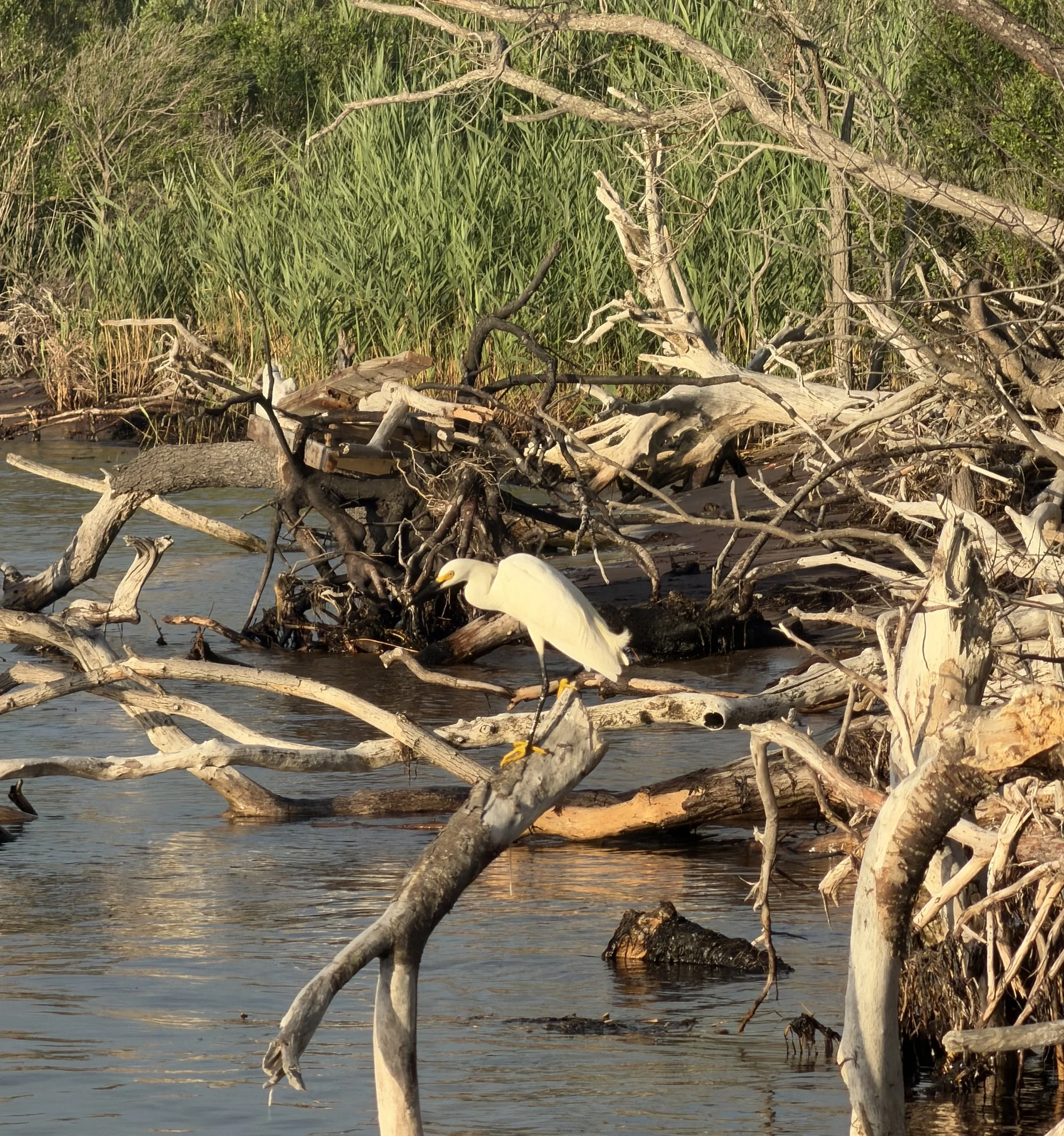
Snowy Egret (Egretta thula) Gleaning Along the Carrington Bay Shoreline
Only a few days after writing about the eelgrass washing ashore in Cherry Grove, I found myself watching two great egrets along the Carrington Tract.
One stood high on a silvered dead tree, preening between long periods of watchfulness over the marsh. The other perched low, just above the water's edge at high tide, nearly concealed by the reeds. As I rustled past on my way into the forest, it remained perfectly still, hidden in plain sight.
Only after I had passed did I realize how completely the landscape had absorbed it.
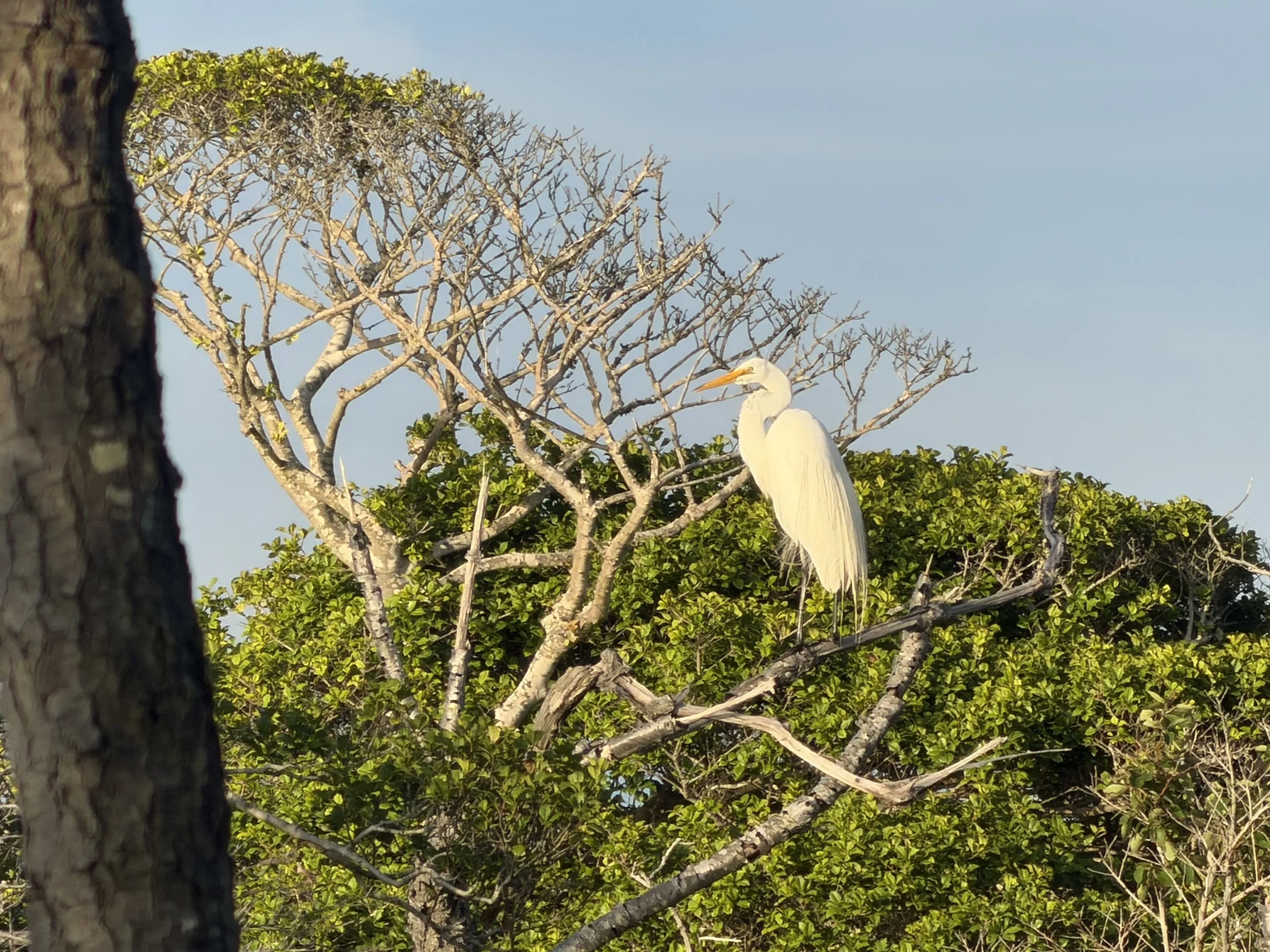
White Egret Standing Watch
The pair appeared to be watching a nearby nest, suggesting they may be breeding in the area, a quiet reminder that much of the island's wildlife is present long before we notice it.
Egrets are patient hunters. While known for fishing the shallows, they also glean the marsh, selecting prey from the surface of the mud, floating vegetation, driftwood, and objects just above the water. Small fish, shrimp, crabs, insects, and other invertebrates all become part of their diet. The eelgrass wrack I had written about only days before, the marsh edge, and the quiet pools beneath the reeds are all part of the feeding grounds they depend on.
Where eelgrass holds the bay floor together from below, smooth cordgrass holds the shoreline together from above. Together they calm the water, collect sediment, create nursery habitat, and support an extraordinary web of life. The fish, crabs, shrimp, and insects living among them become food for wading birds like the egret. What first appears to be separate stories is, in fact, one continuous ecological system.
As I continued walking, that story widened.
Along the Carrington Tract, erosion continues to reshape the shoreline. As the bay slowly claims the forest edge, black gum, American holly, and sassafras succumb to saltwater intrusion. Some fall into the bay, becoming driftwood that shelters fish, crabs, mussels, algae, and countless other organisms. Others remain standing, their trunks silvered by years of salt wind and weather.
Fire Island has never been a static landscape. Barrier islands migrate. Shorelines advance and retreat with storms, tides, sea-level fluctuations, and shifting sands. Some degree of shoreline change is part of the island's natural rhythm.
The Carrington shoreline, however, tells a more complicated story.
Natural forces continue to shape the island, but human decisions have influenced this place too. During the 1980s and 1990s, bulkheads were constructed to protect Cherry Grove and Fire Island Pines from bayside erosion. While they stabilized developed shorelines, they also changed how wave energy moved through this part of the bay. Decades of recreational and commercial boat wakes striking those hardened edges have reflected energy toward adjacent, unprotected shoreline, contributing to erosion along portions of the Carrington Tract. Rising seas, stronger storms, and the island's own natural migration continue to shape this landscape as well. Together, these forces have transformed the forest edge into something few people expected.
To many, it appears to be a dying forest.
Ecologically, it is becoming something new.
These standing dead trees, known as snags, are among the most valuable habitats in a changing coastal landscape. They provide hunting perches for egrets, herons, kingfishers, and ospreys. Woodpeckers forage beneath their bark. Insects colonize the decaying wood, feeding birds and enriching the food web. Cavities become nesting sites for countless species, while broken limbs provide lookout posts above the marsh.
Many have seen the local osprey fishing over these waters.
This morning, one of those silvered snags held an egret quietly watching the tide. Another bird disappeared among the reeds below, nearly invisible except to someone willing to stop and look.
The tree itself was no longer alive.
Yet it was supporting life in every direction.
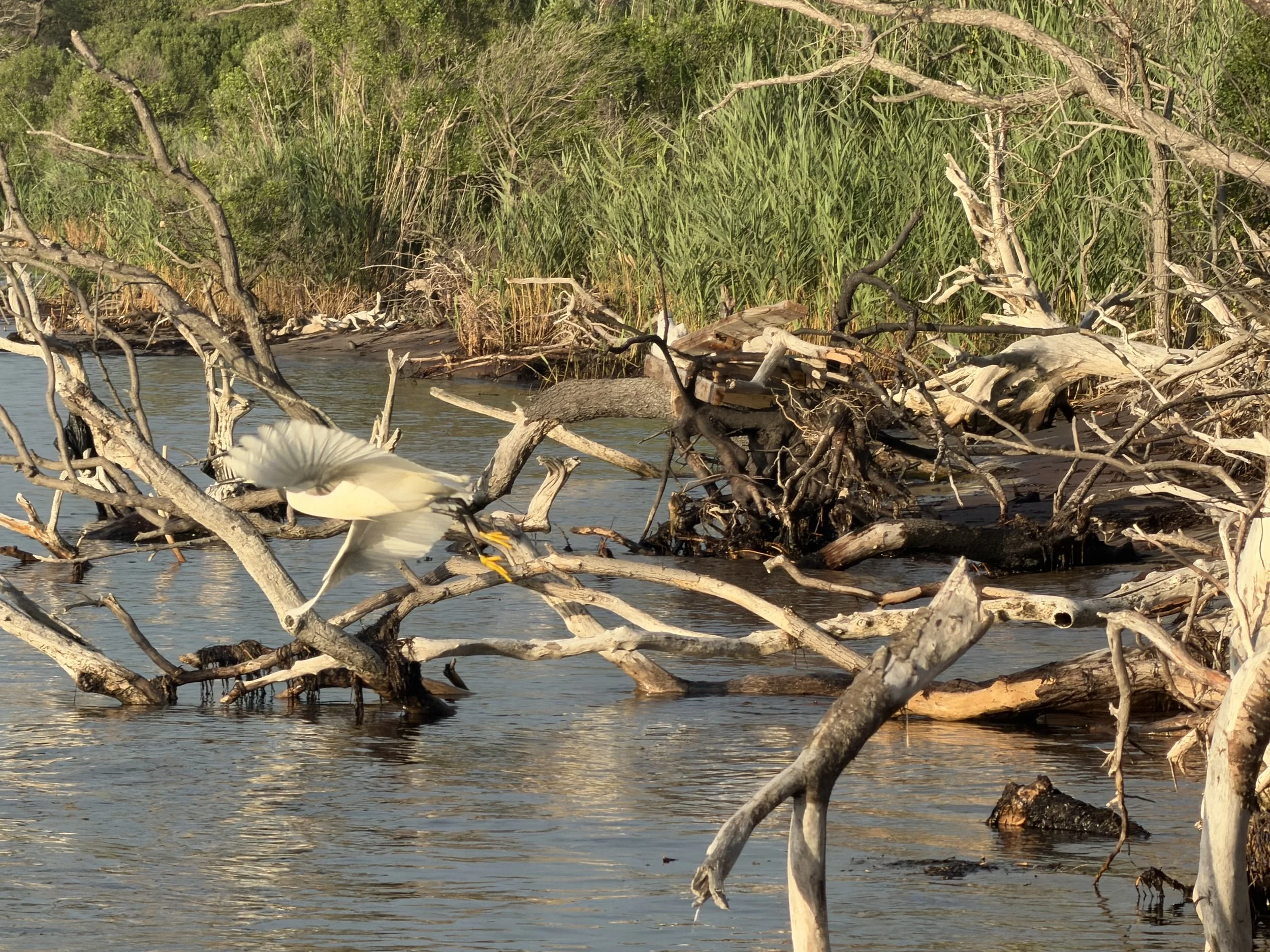
The Hunter in the Nursery: Shoreline Habitat
Nature wastes very little. One habitat becomes another without ever truly ending. Eelgrass becomes wrack, feeding the shoreline. Smooth cordgrass traps sediment and builds the marsh. Marshes shelter fish and crabs. The forest gives way to snags. Snags become homes, perches, and hunting towers. Even driftwood continues the work, sheltering life beneath the water as tides move through its branches.
Nothing stands alone.
The egret was never simply perched in a dead tree.
It was standing within a continuous living system that began beneath the bay in the eelgrass, rose through the marsh, reached into the forest, and will continue to evolve with every tide.
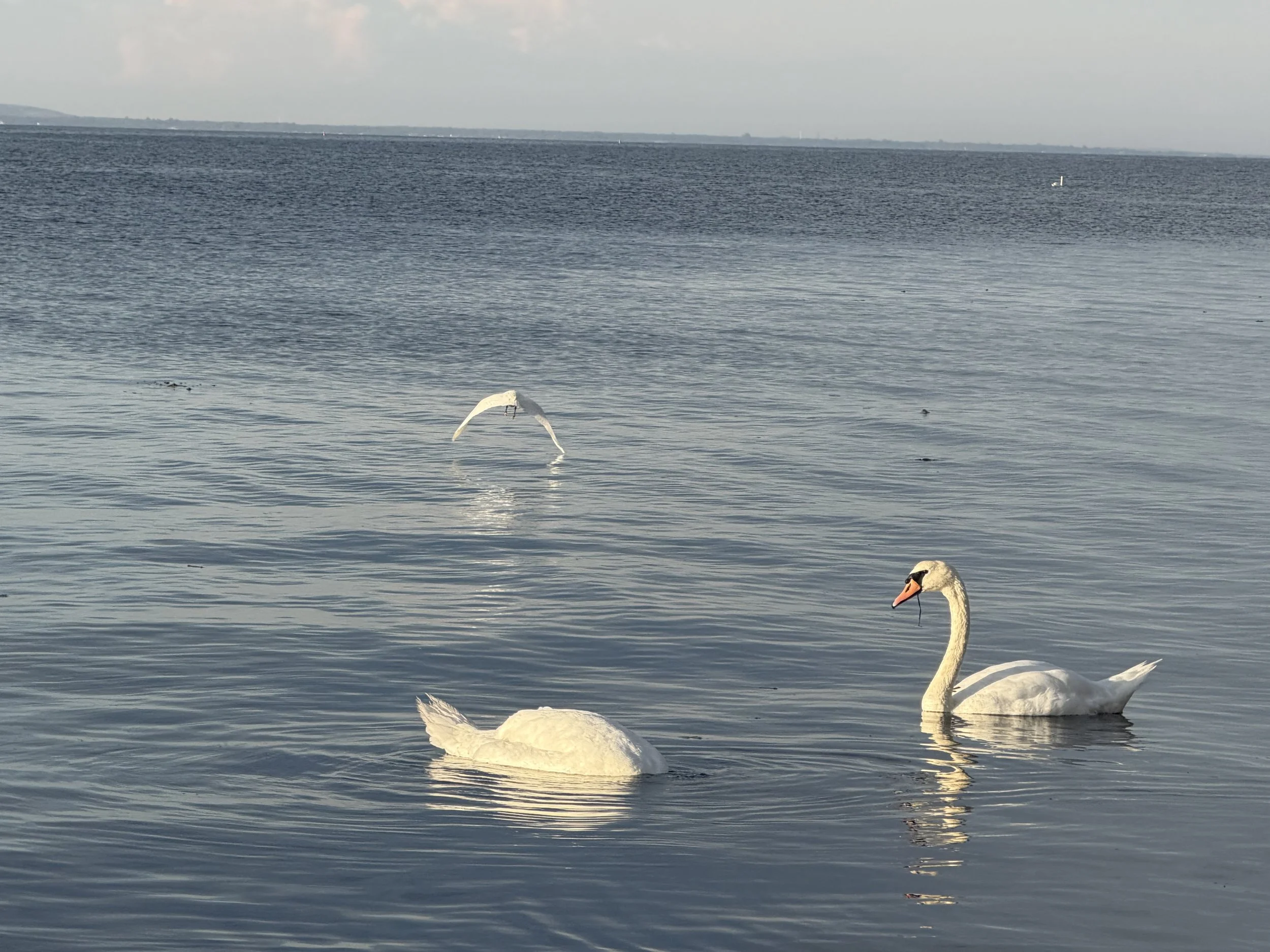
Great South Bay Egret Takes Flight Over Swans