Fire Island Wild Work
❋
3rd Dune
concept: hill cover
Hill Cover — shaping the landscape through sand, shade, and layered planting
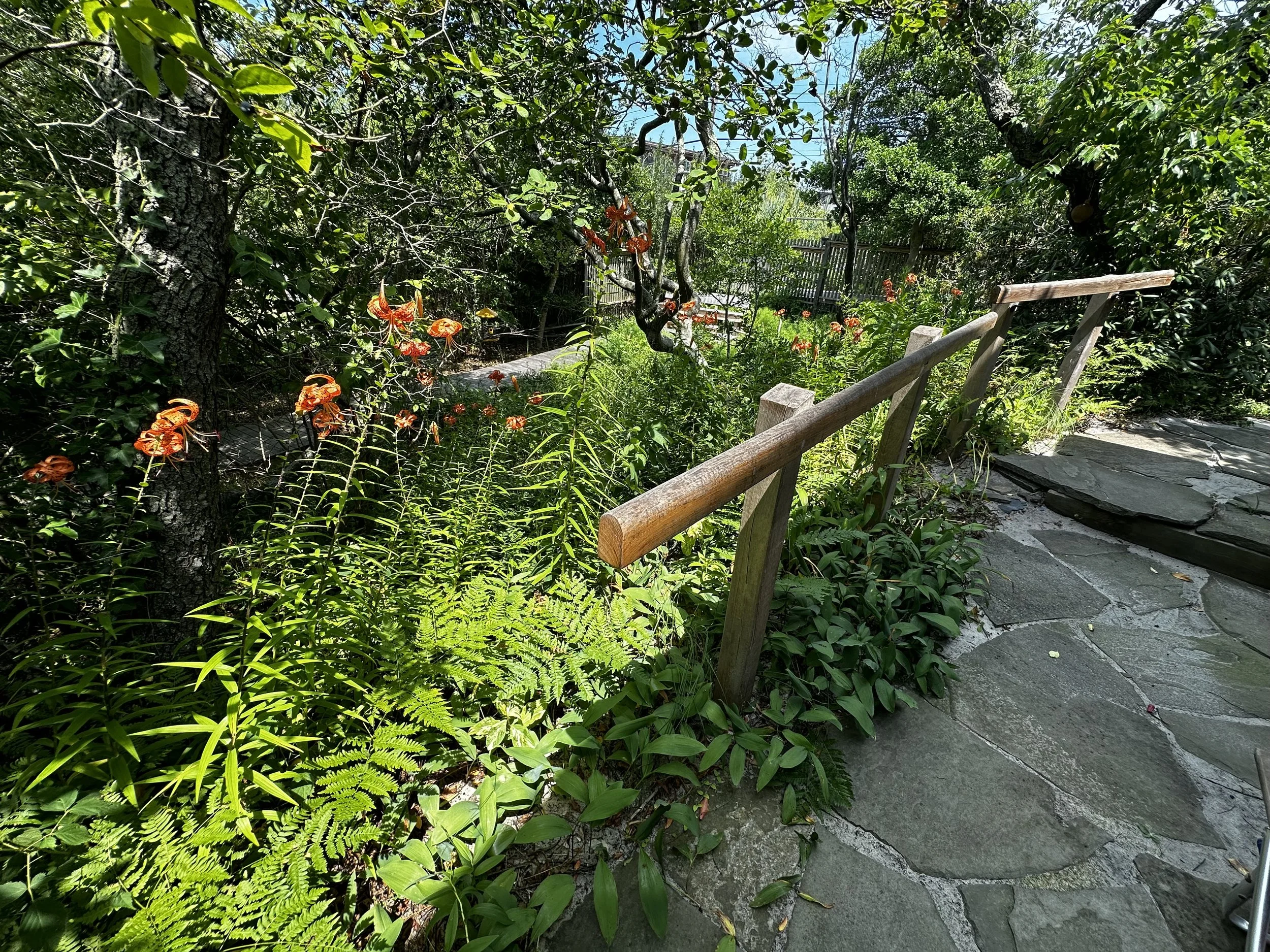
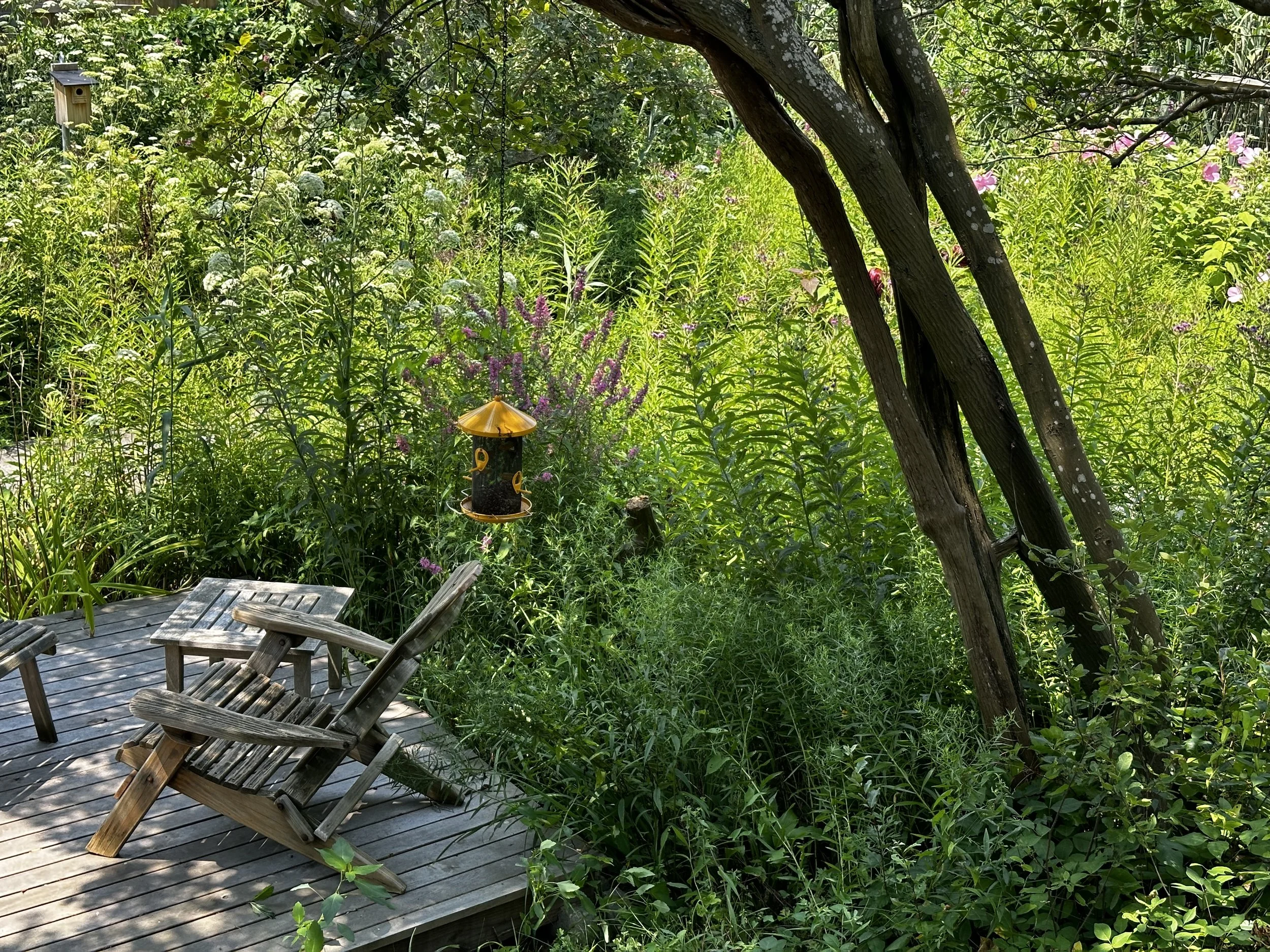
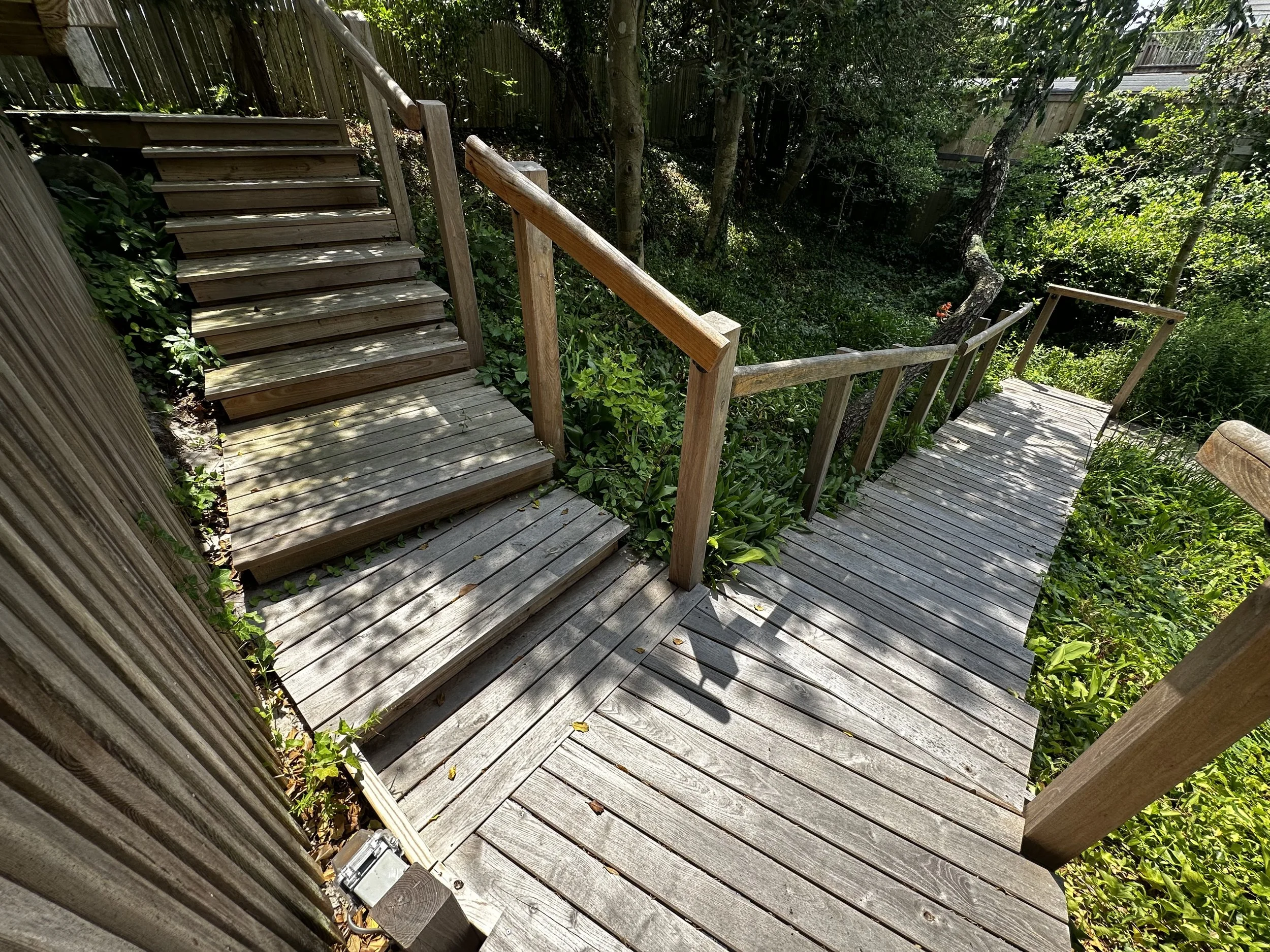
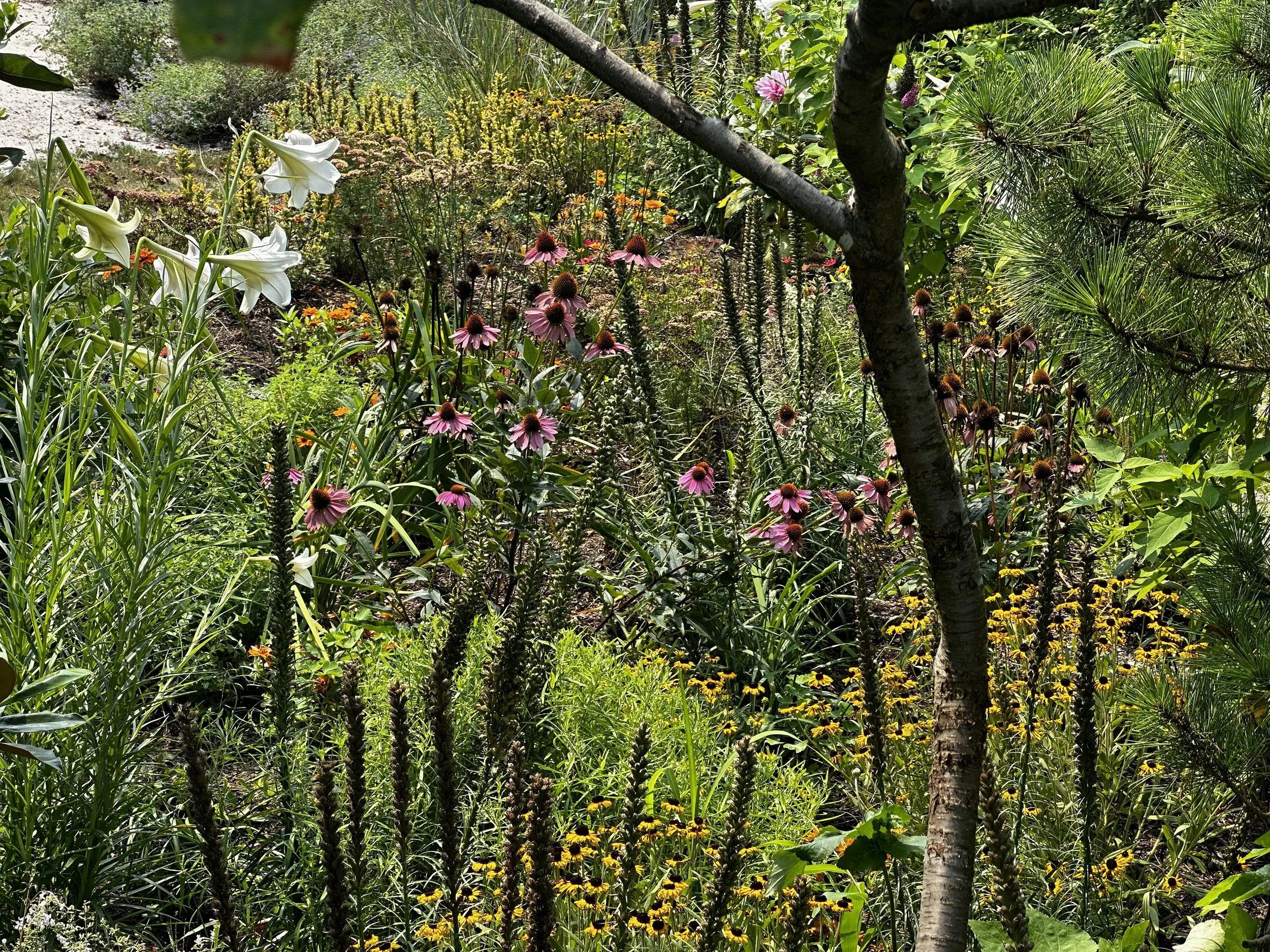
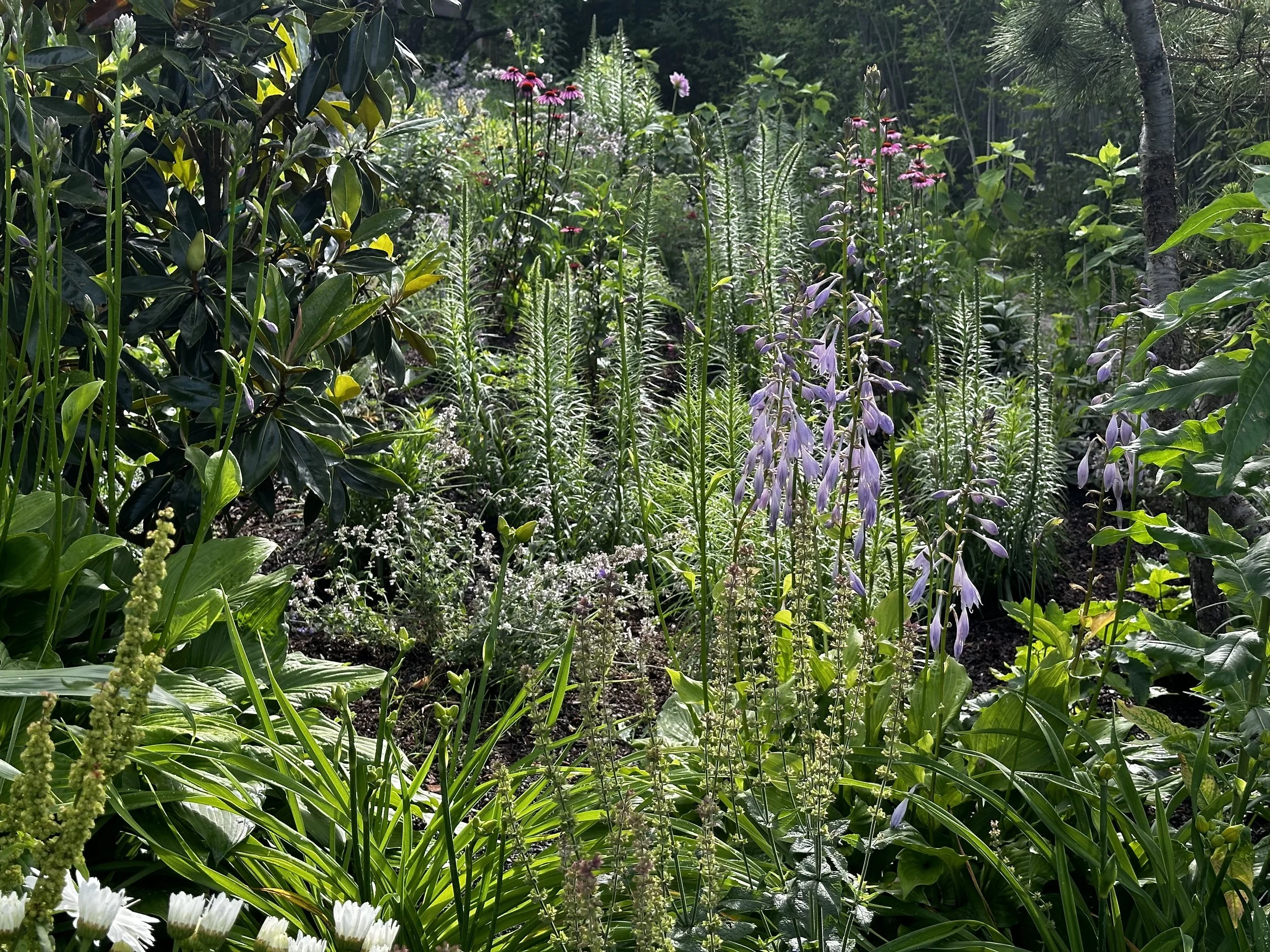
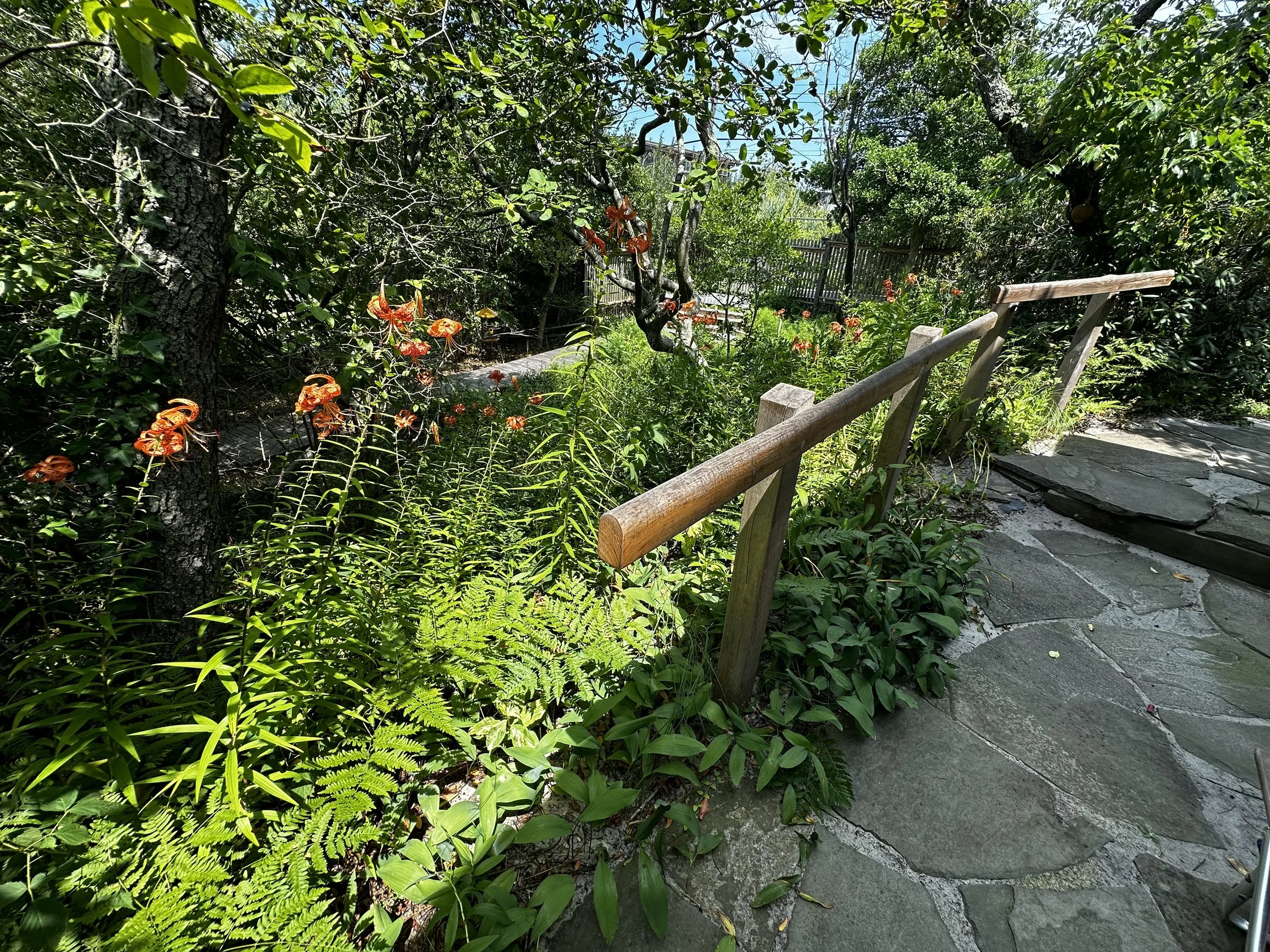
Set on high dunes of pure sand, these landscapes rely on careful grading and deliberate planting. Shade settles beneath holly, cherry, shad, and cedar, forming a cool, sheltered canopy.
Below, layered groundcovers seen here are lily of the valley and bracken fern are lifted by foxglove and orange tiger lilies.
Paths move lightly through the space, edged with simple, sculptural locust wood handrails.
❋
Wetland
concept: seed starters projects do well in wet.
Wet Holds Seed
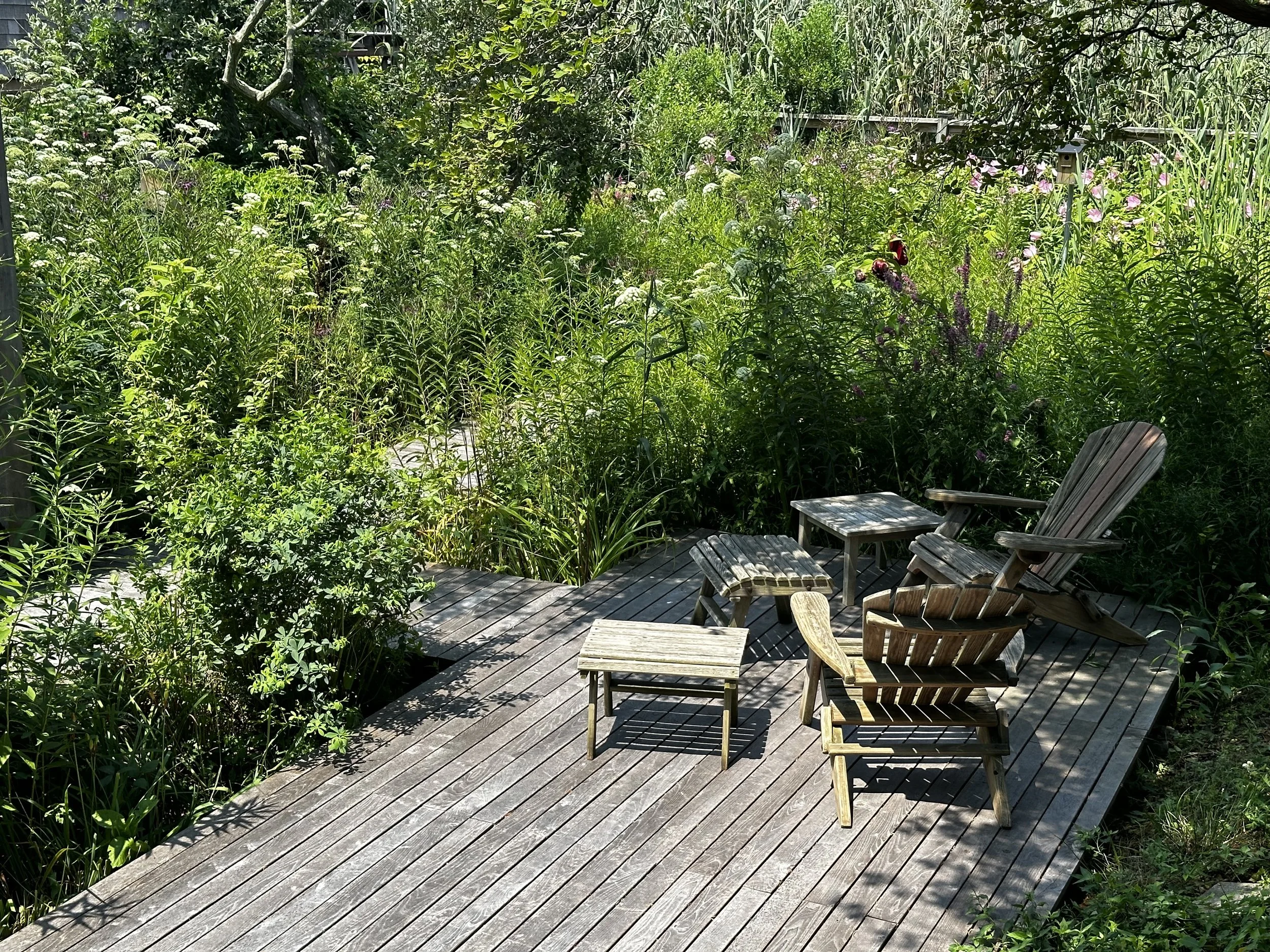
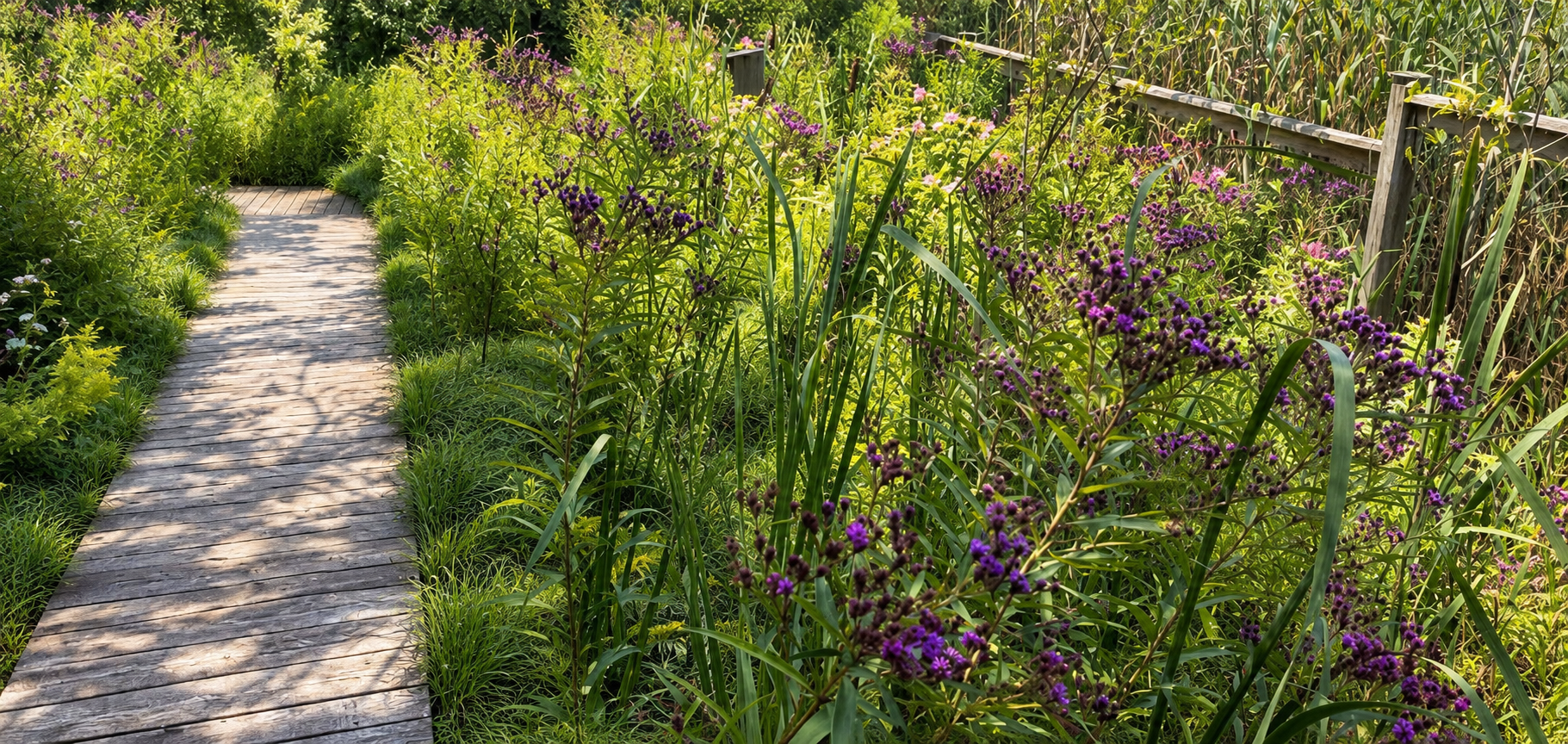
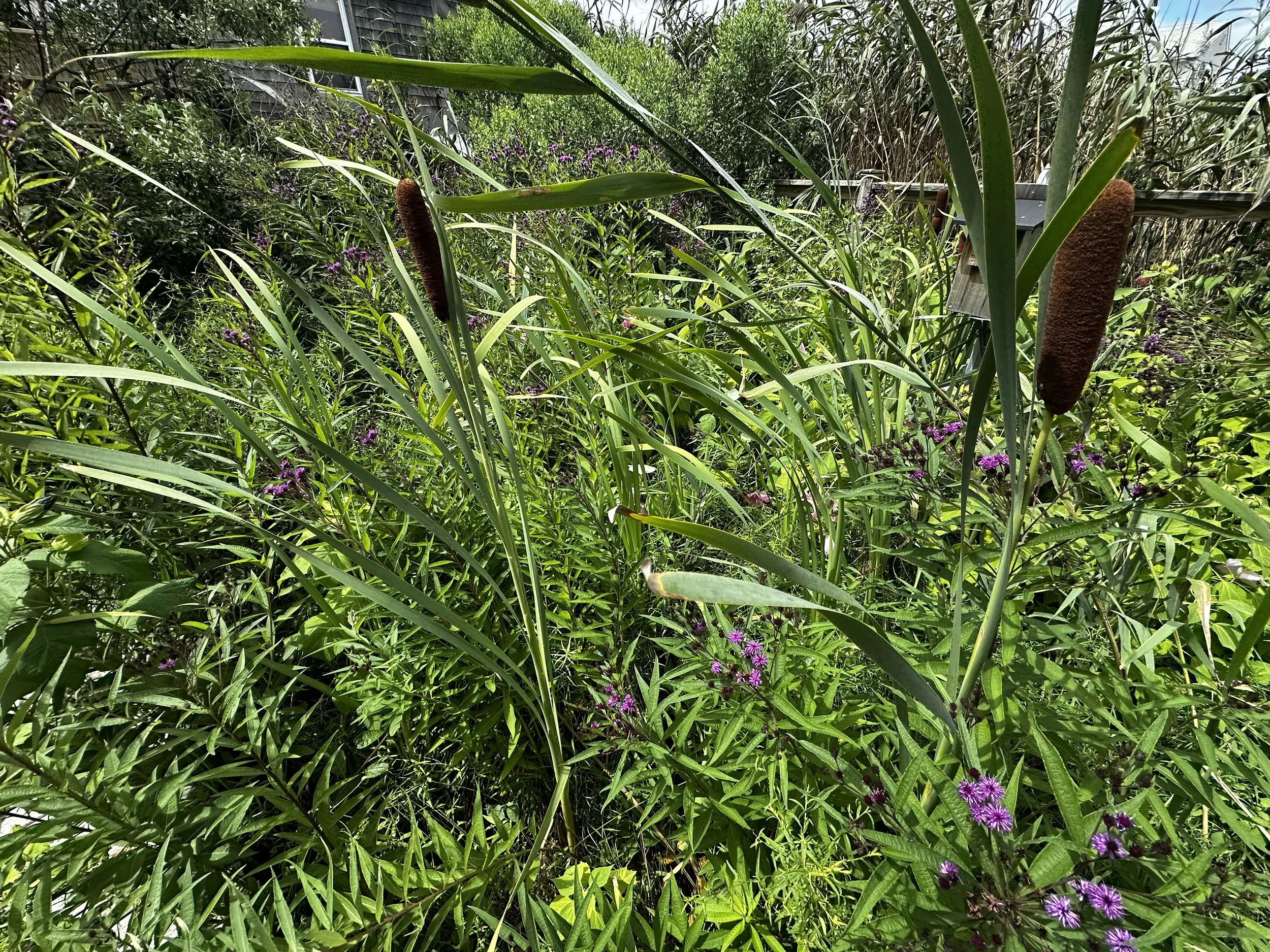
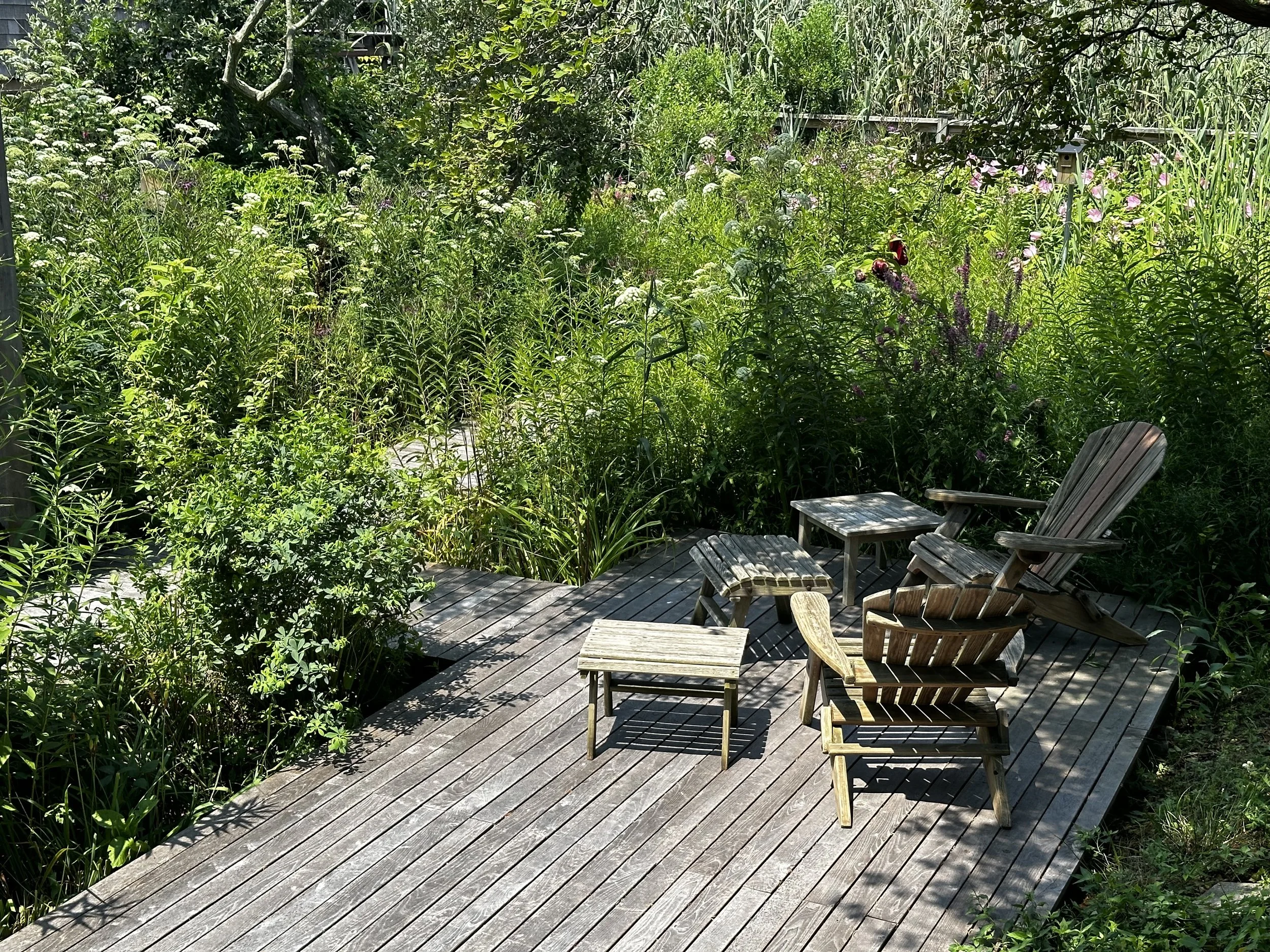
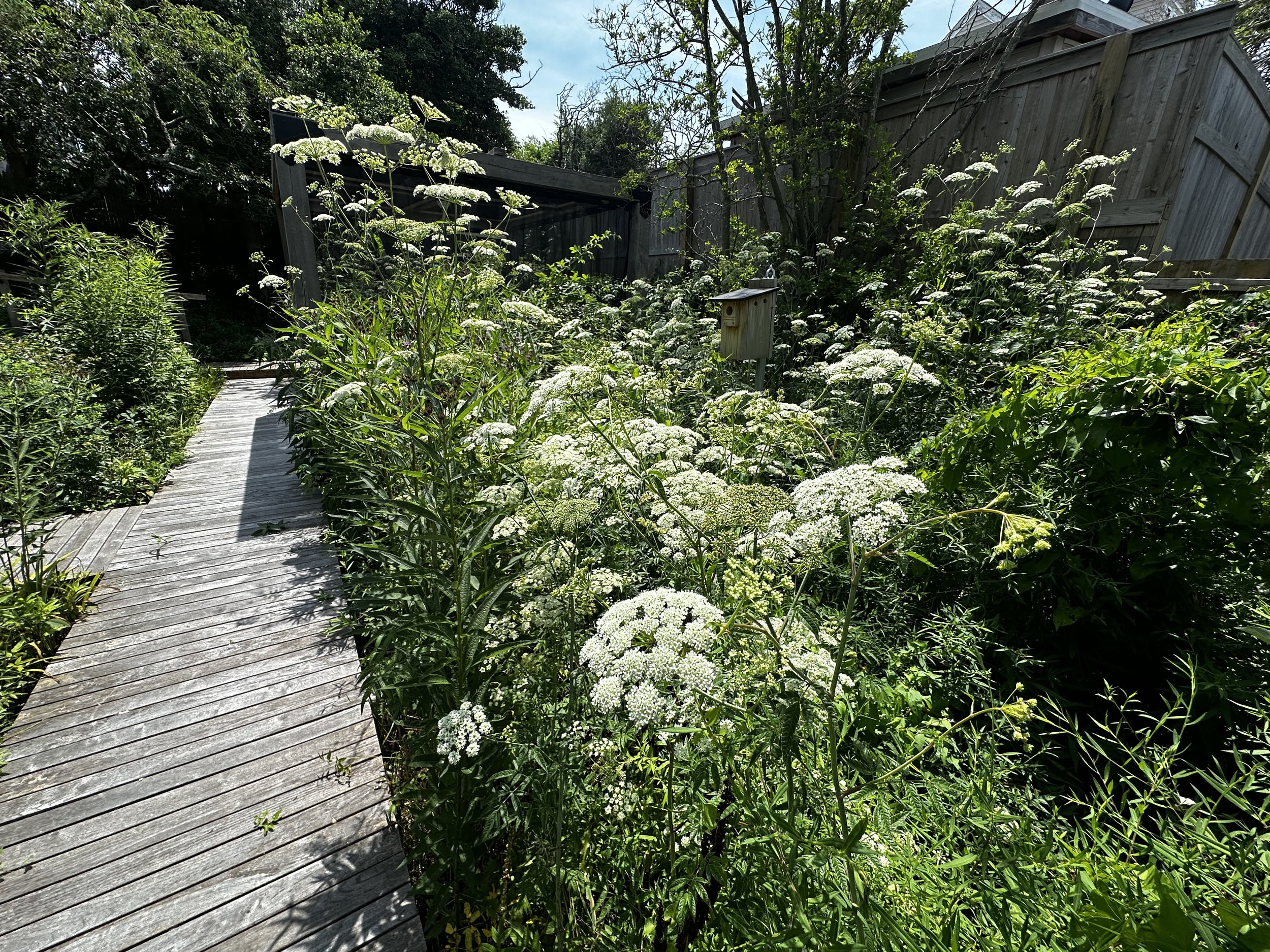
Where Phragmites australis (common reed) dominates, the work is one of quiet replacement reintroducing cattails, rushes, and wetland wildflowers.
Over time, the monoculture loosens, giving way to a living screen, protective, yet porous, and alive with the movement of the coastal wetland.
❋
Habitat
concept: cattail & dragonfly habitat.
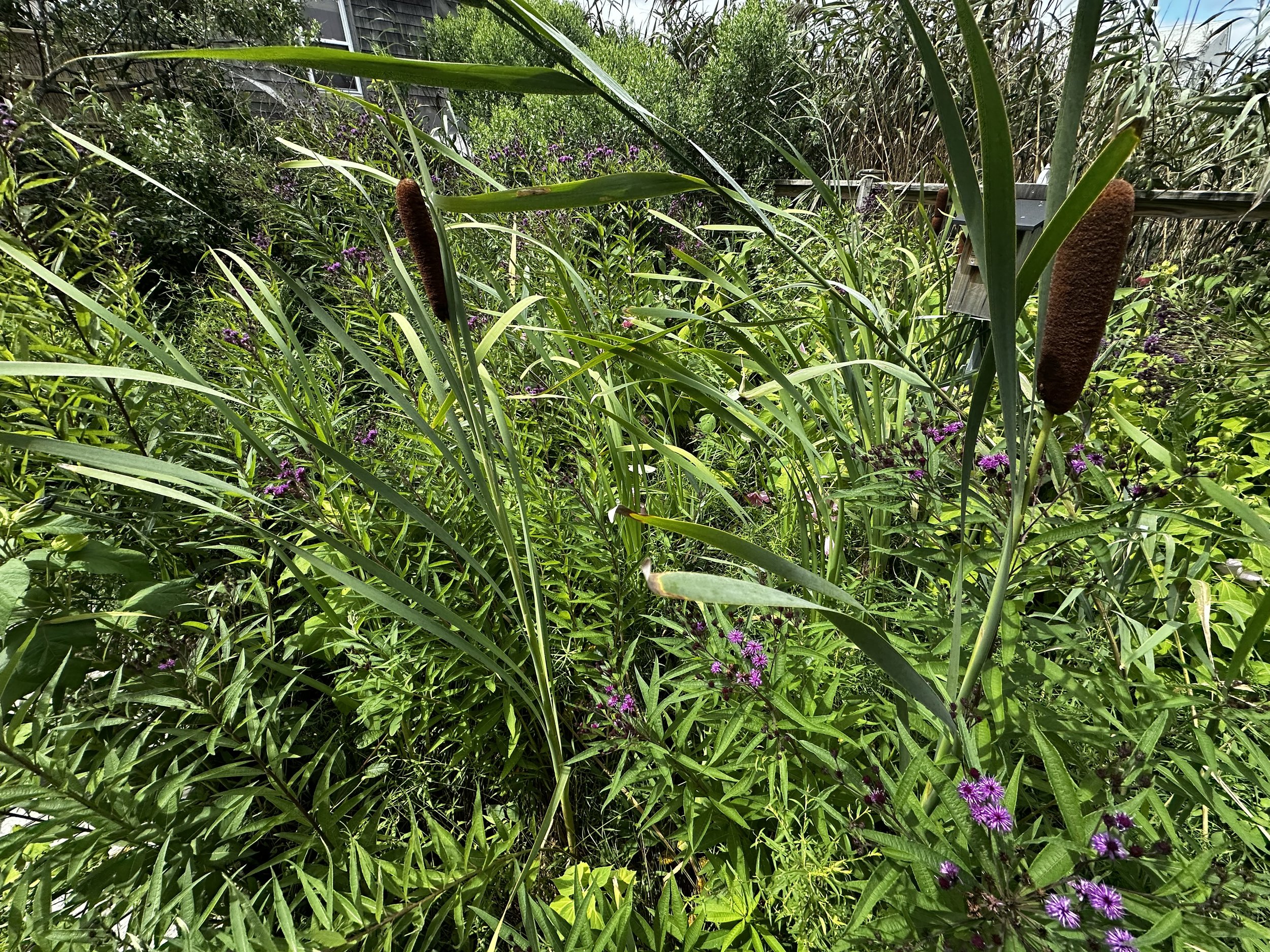
Plants create place.
Cattails form a preferred perch for dragonflies in the wetland offering structure, rest, and vantage above the water.
❋
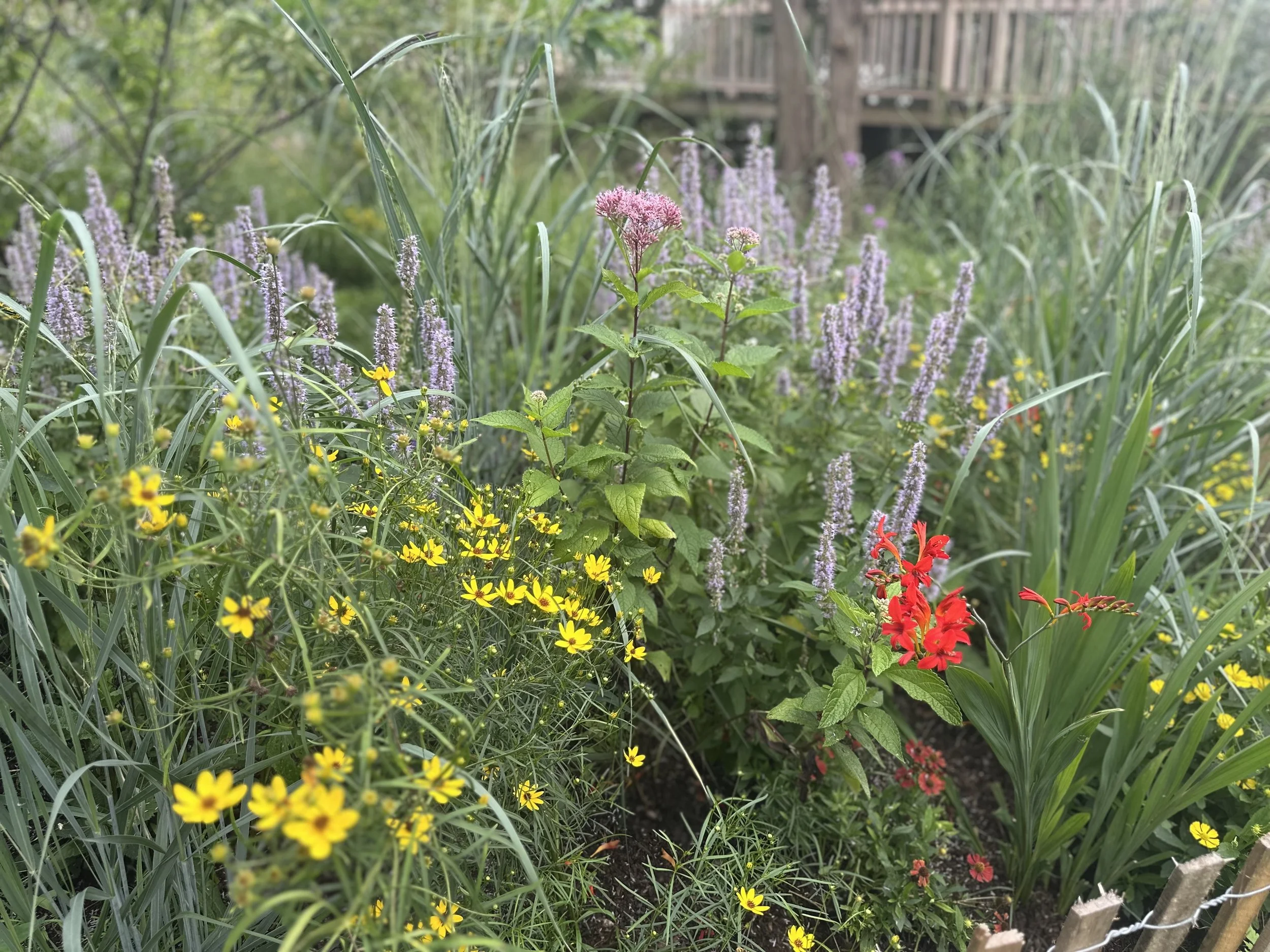
Dry Meadow
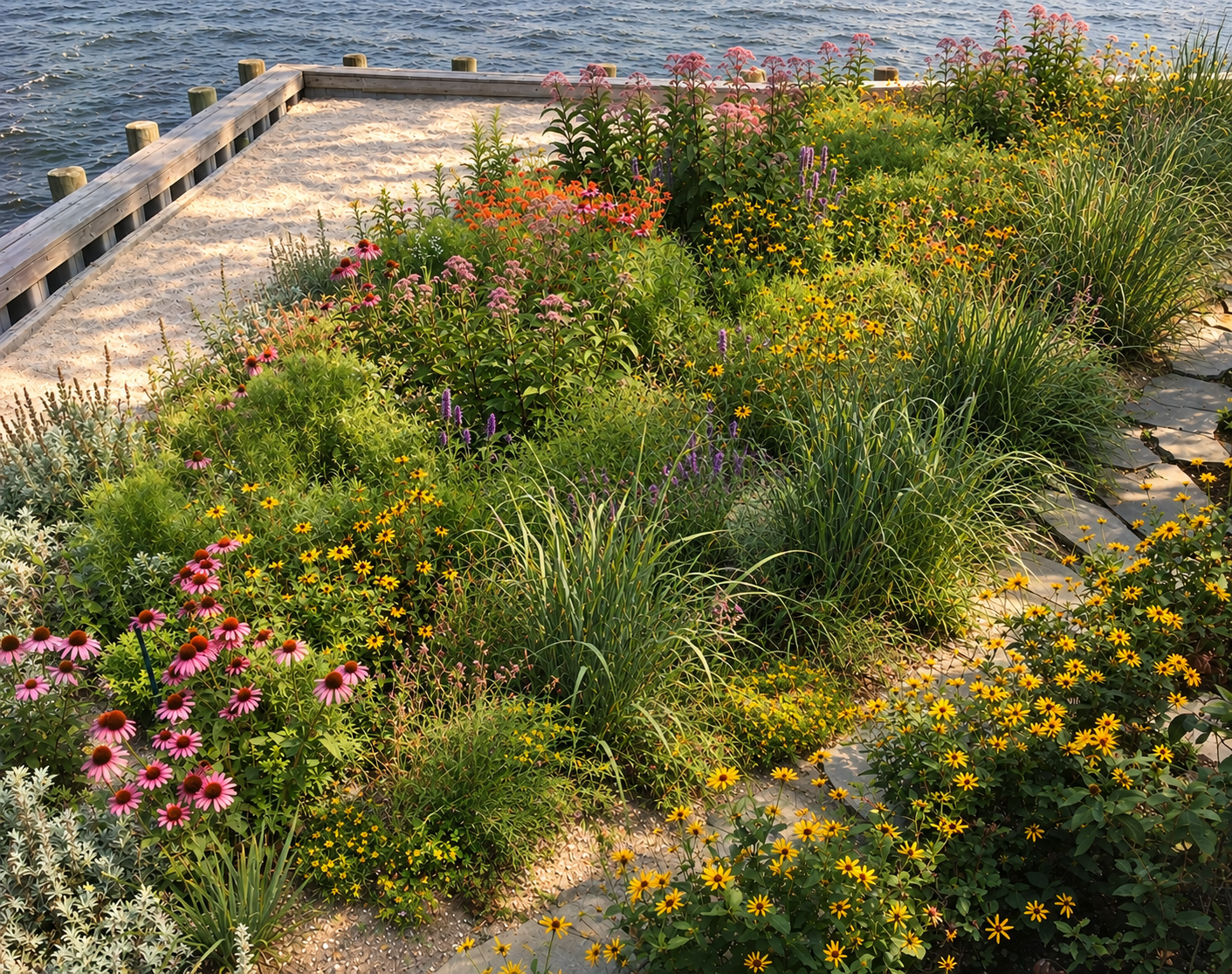
concept: succession pollinators.
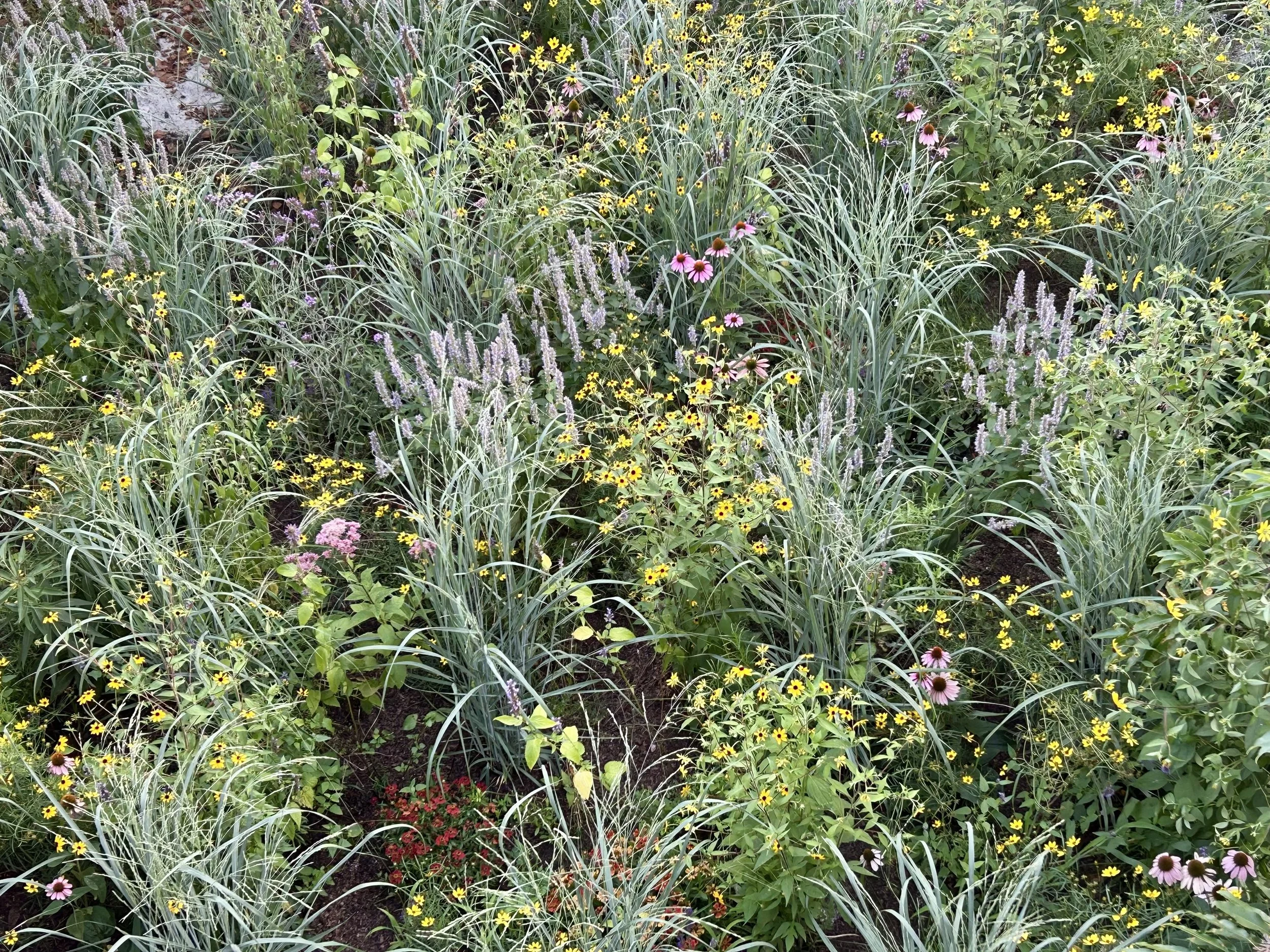
In the dry meadow, nothing holds for long, and that is the point.
Succession carries the field. One bloom gives way to the next; grasses rise as flowers fall, and fruit follows. The meadow lives in passing moments of colors shifting, heights changing while butterflies and sulphurs move through it, keeping time with the season.
❋
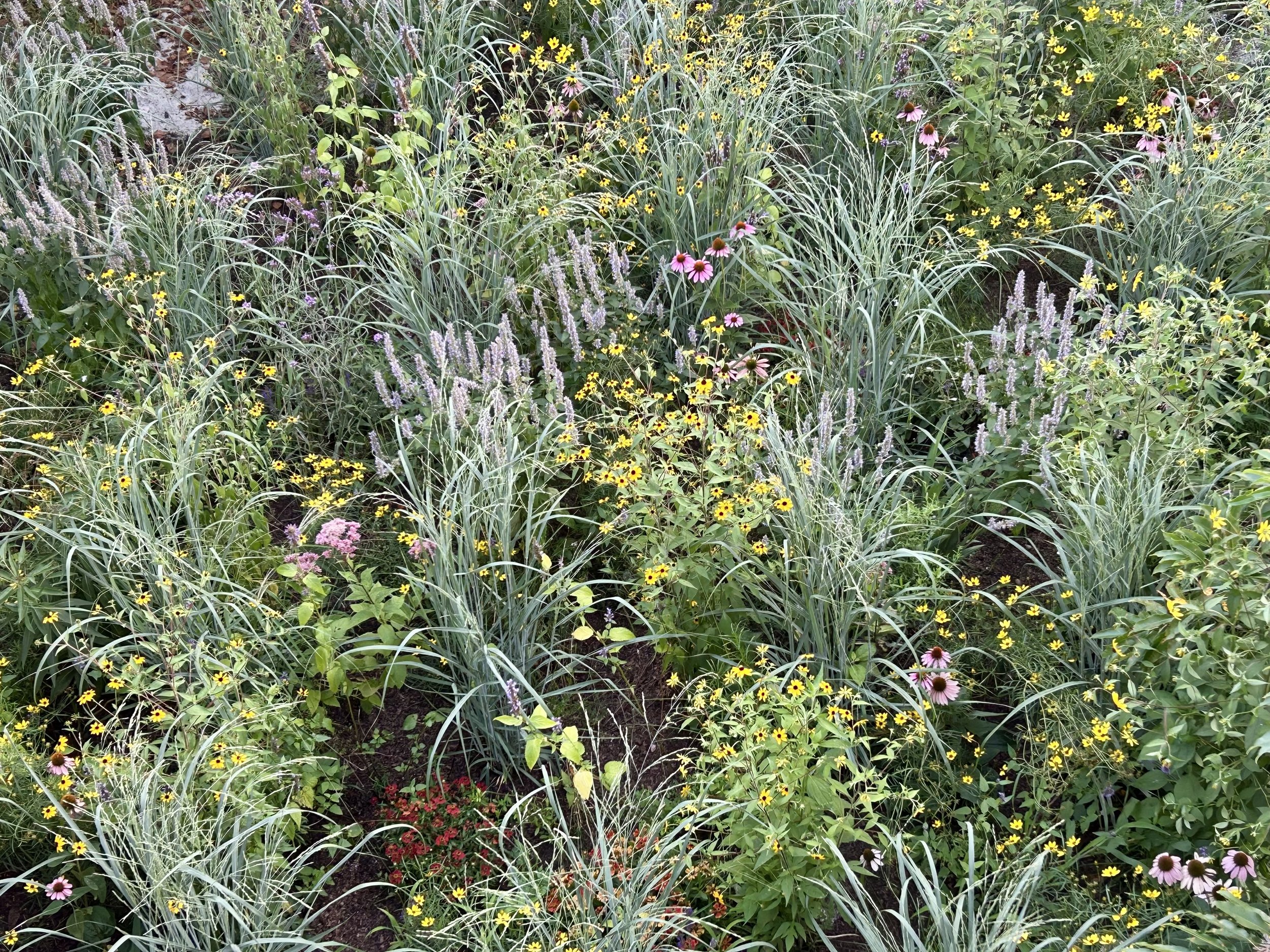
Building Grassland
concept: starter plantings for seed dispersal.
A grassland begins in one place, and then it moves.
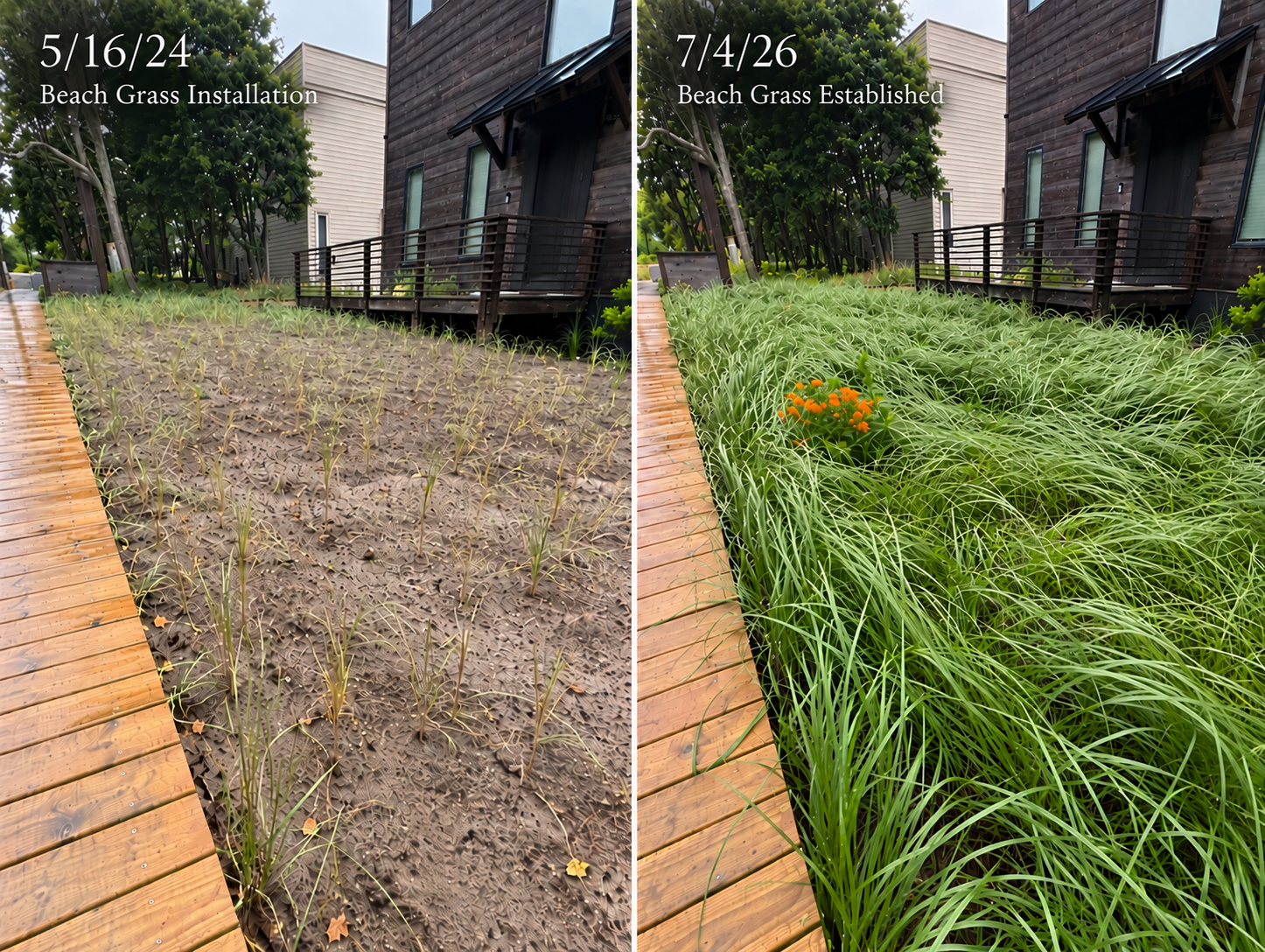
We plant a beginning, not a finish: a small colony set into motion, carried outward by wind and time. Panicum leans and travels, its companions following. A few seasons pass, and what was once a patch becomes a field.
The work is to let it happen, to trust naturalizing perennials as they find their ground.
In spring, when everything is just beginning, hold back.
If you don’t know it, don’t pull it.
❋
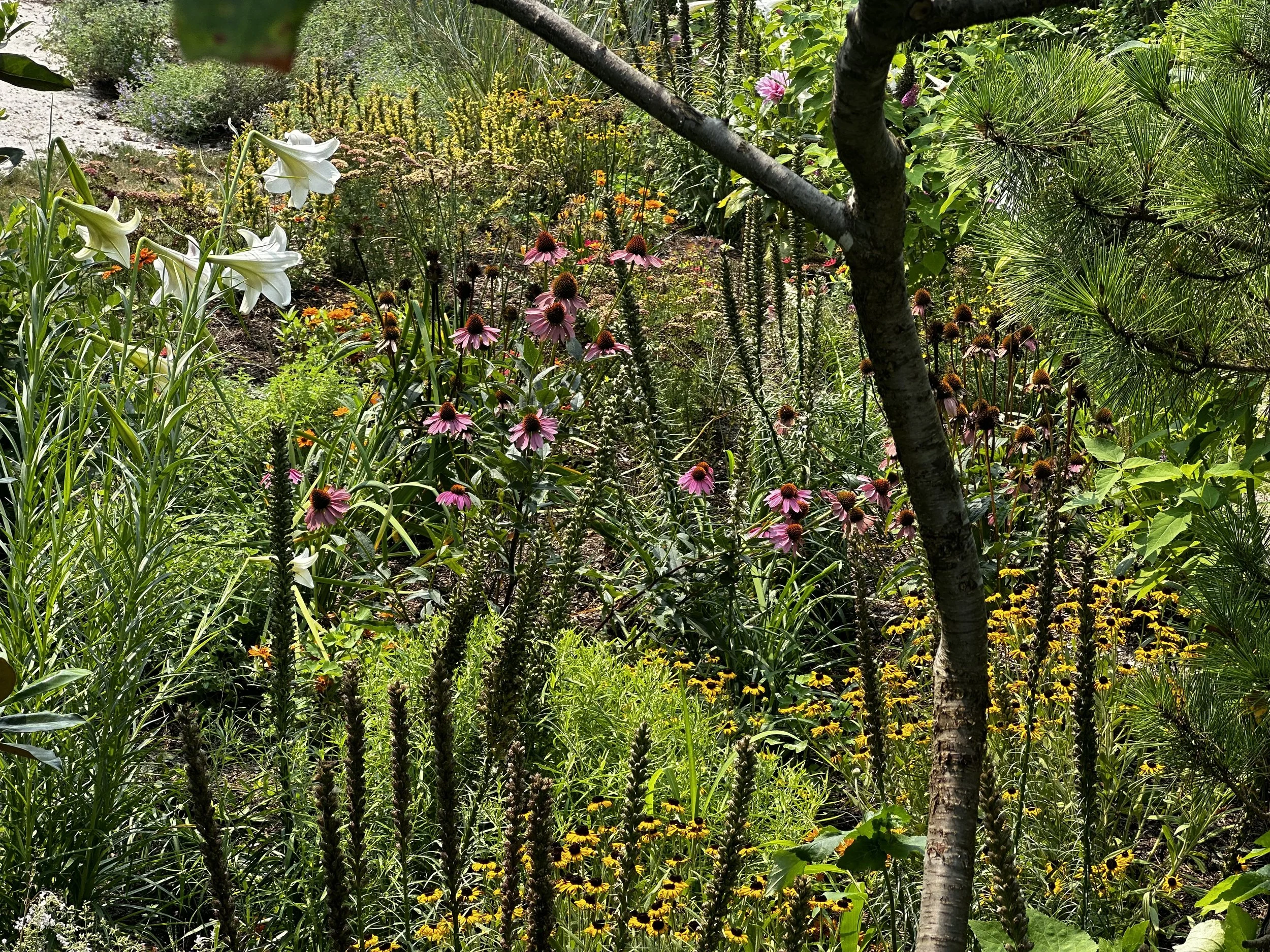
Sun Patch
concept: mixing wild flowers.
A sun patch is an open canvas, a place to let go.
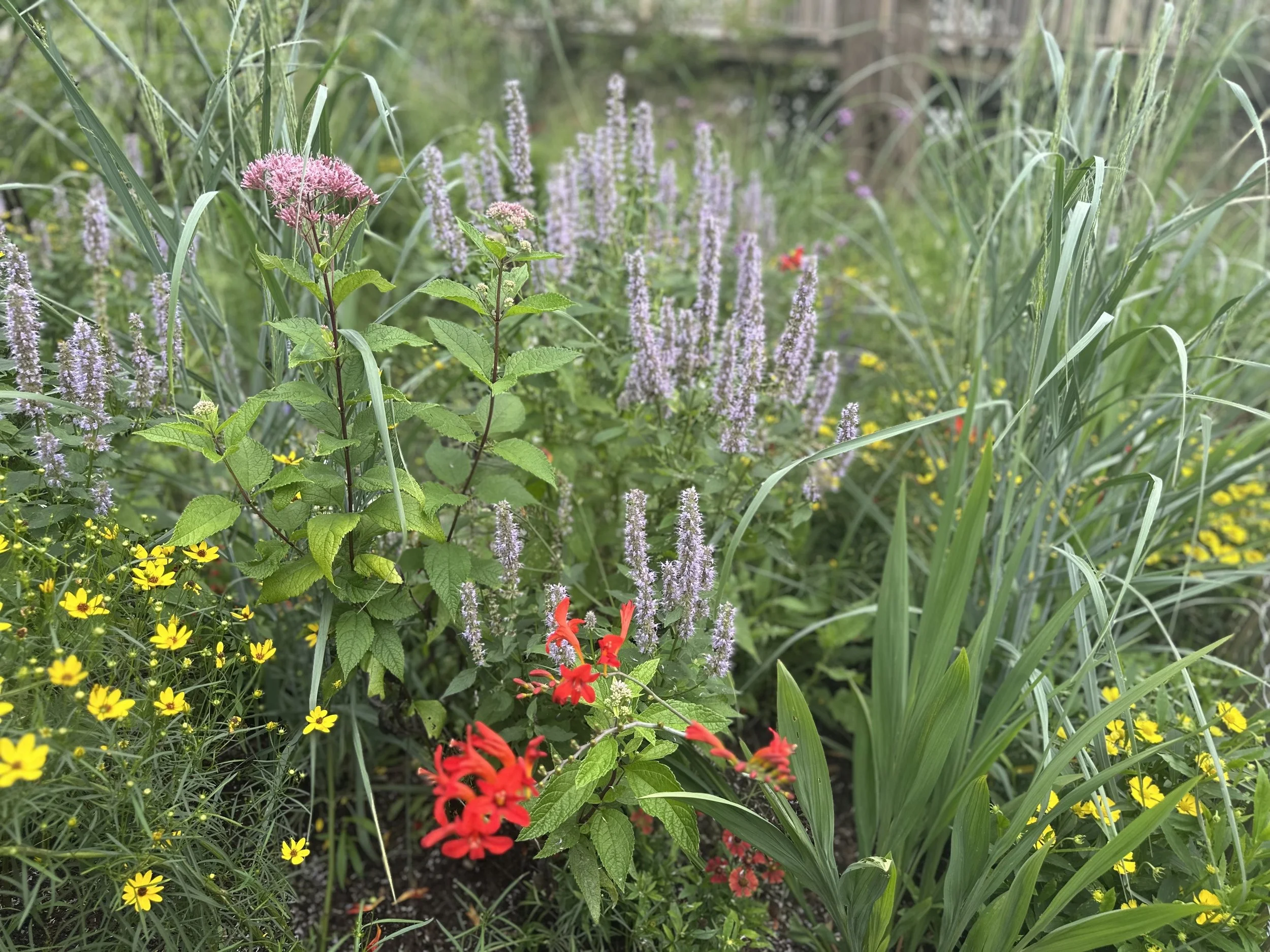
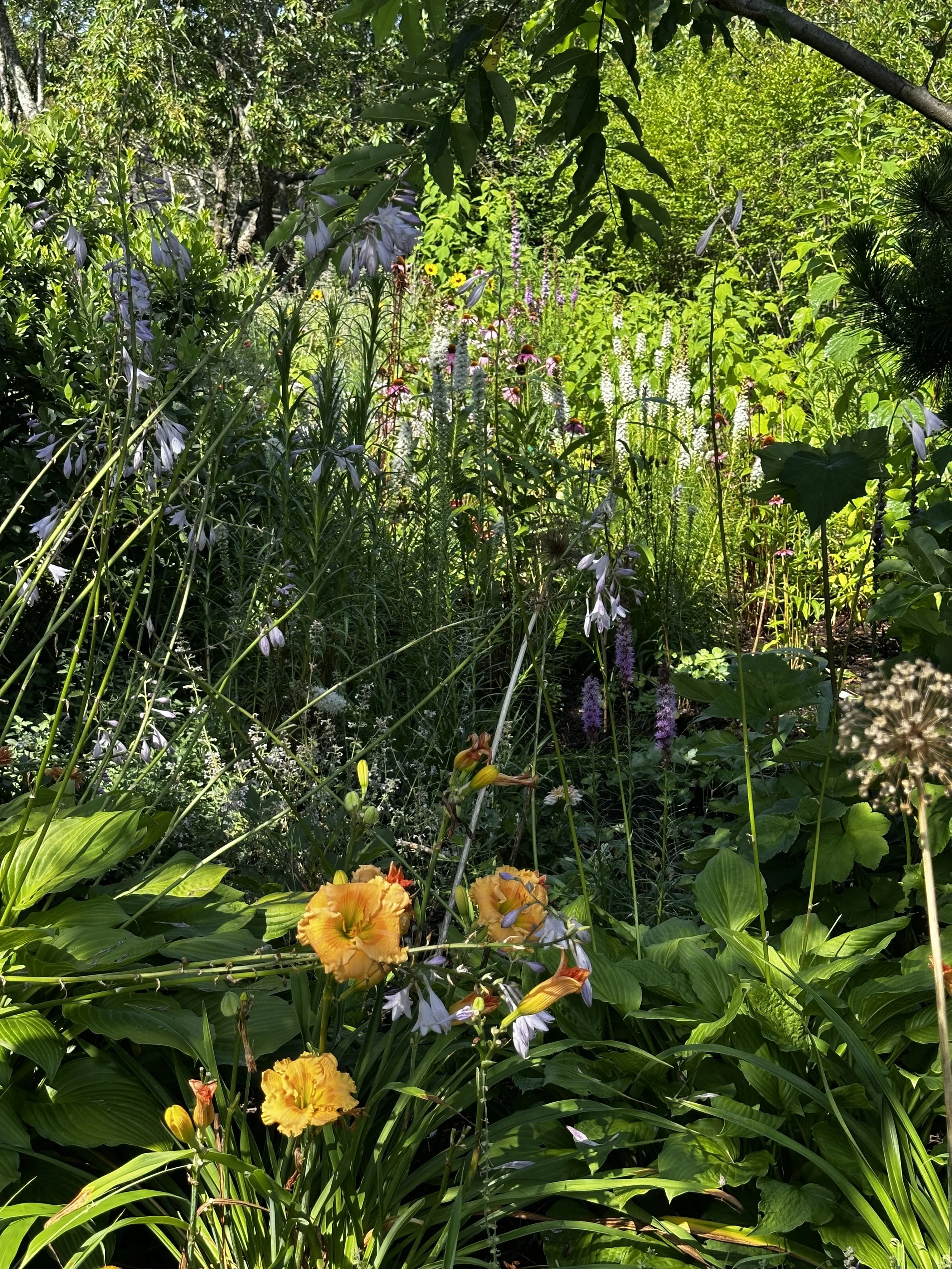
It favors a looser hand: clusters, vertical accents, and drifting wildflowers, placed as much by instinct as by plan.
Native species lead for resilience, ecology, and belonging. The garden carries itself from spring into summer, shifting as each plant takes its turn.
It may begin all at once, but more often it builds slowly, a few plants each year.
Time refines it.
A sun patch grows into itself.
❋
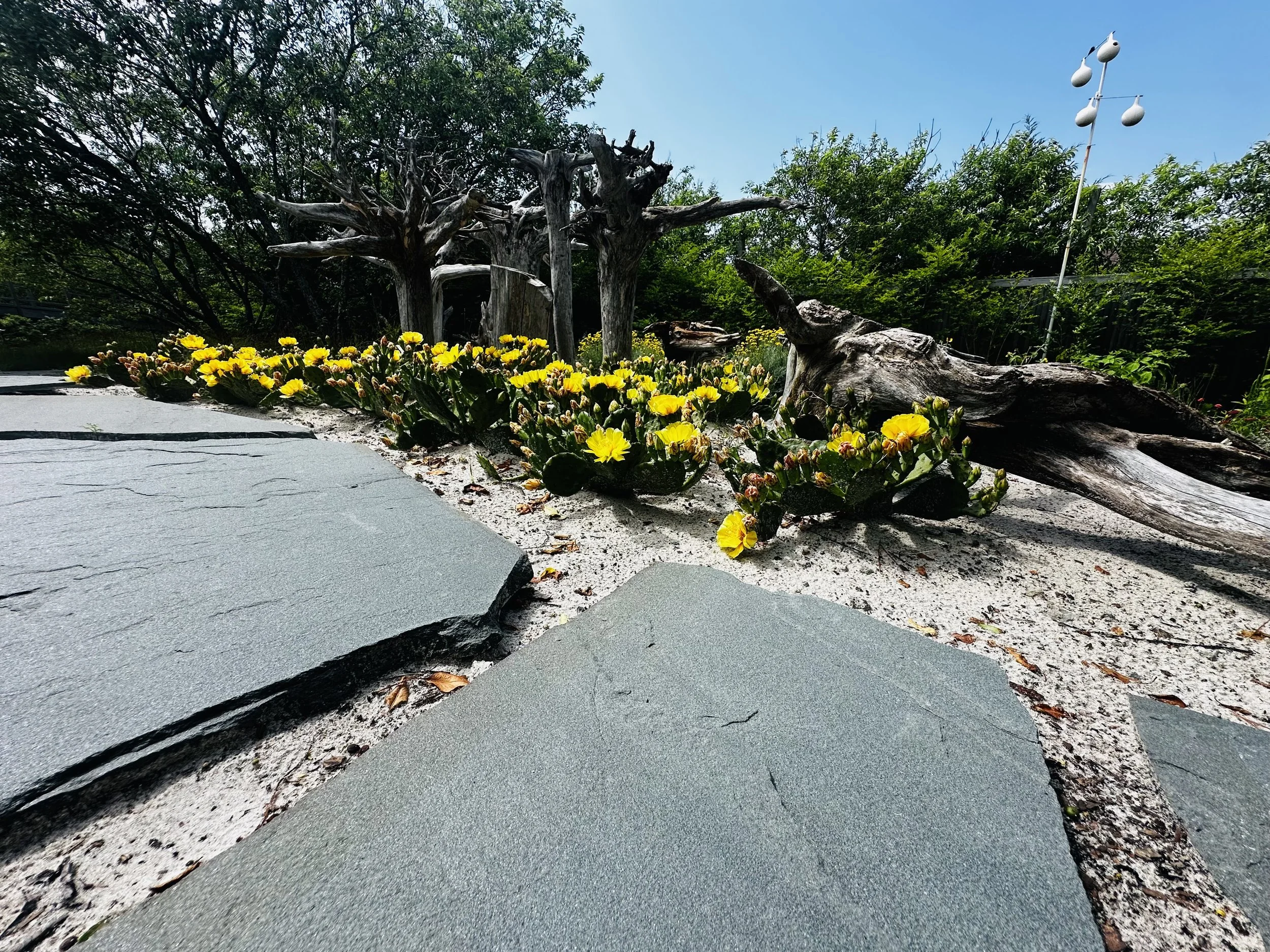
Sand & Cactus
concept: prickly pear and driftwood.
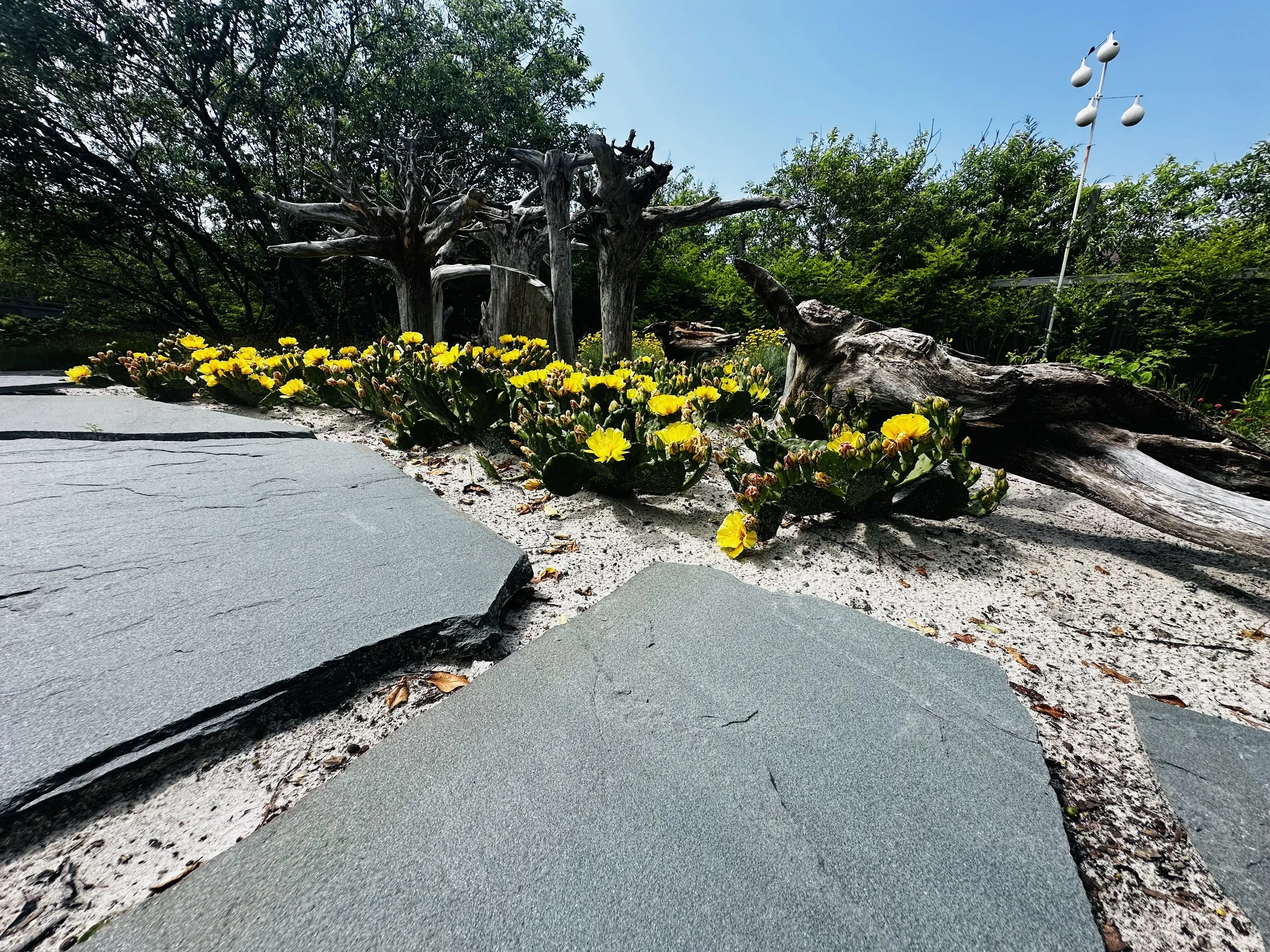
For those who want the land nearly bare, this is enough.
Sand, driftwood, and Opuntia.
The paddles multiply from summer to summer.
Then, all at once, it blooms
a sudden burst of color against the sand.