Land Report #6: Best Kept Secrets: Facing Shoreline Erosion and Finding Ecological Succession
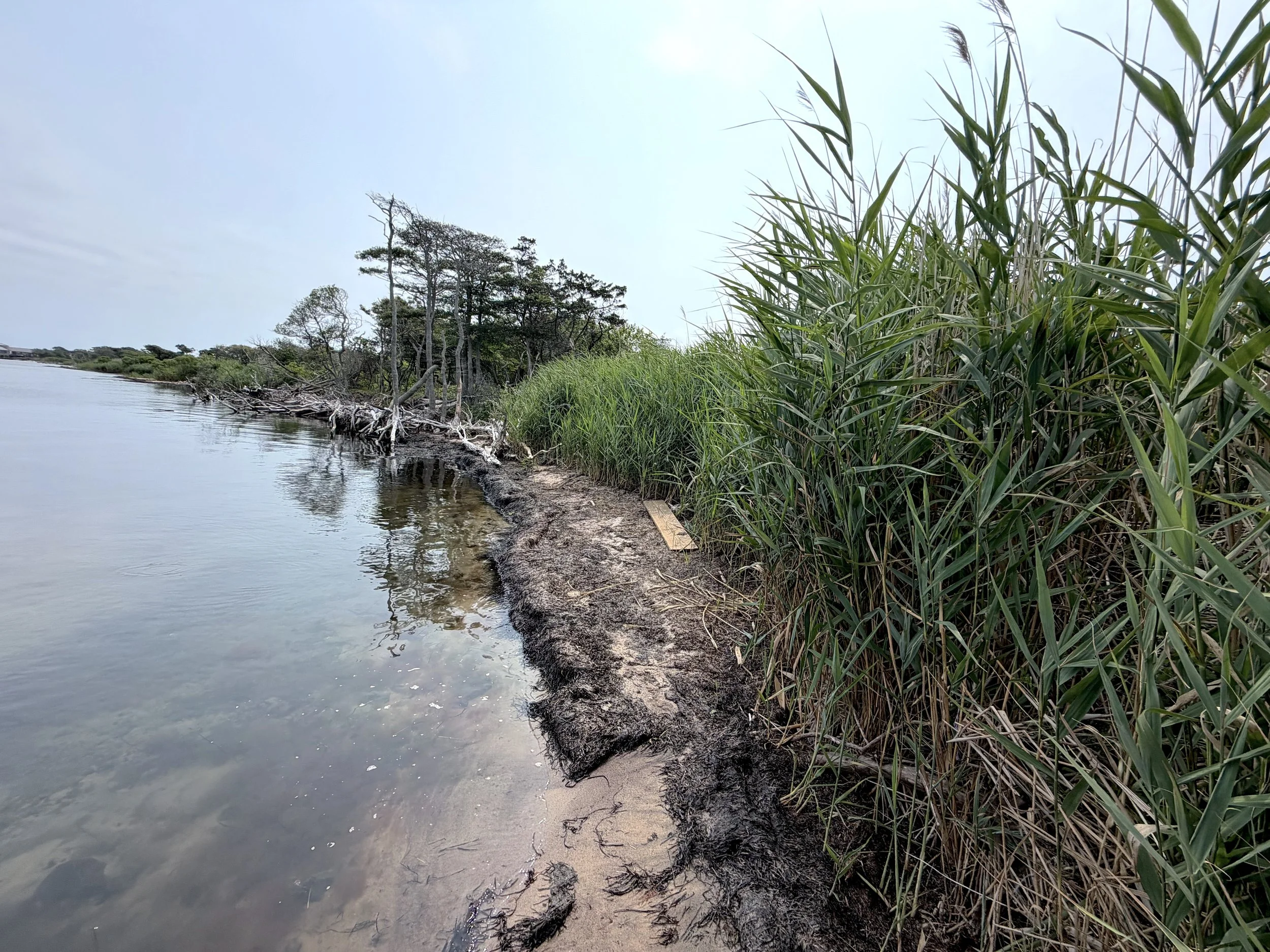
Carrington Tract Bay Shoreline
I have been concerned about bayside erosion and the loss of our shoreline forests for years. Between ferry and boat wakes, rising bay waters, and increasingly exposed forest edges, I began reading everything I could about shoreline erosion, aquatic ecology, and living shoreline systems. In the off-season, I started studying mudflats across Fire Island, particularly the more robust marsh systems west of the Robert Moses Bridge.
With my background in horticulture, I realized I could read the shoreline much as I have always read the land: through its plants. What grows, what disappears, what arrives next, and what follows it can tell us what is happening beneath our feet.
Knowledge gives us new eyes. Some of Fire Island's greatest ecological stories happen where almost no one is looking.
And that is how I found one of Fire Island's best-kept secrets.
Along the bayshore east and west of Cherry Grove, years of storm activity have steadily reshaped the forest edge. Dense stands of invasive common reed (Phragmites australis) occupy many of these wetlands and shallow mudflats. While phragmites can spread rapidly and dominate a shoreline, it is a poor long-term foundation against the forces of a tidal bay. Saltwater, waves, ice, and repeated disturbance eventually undermine its dense root masses. As they collapse, the shoreline retreats.
The evidence surrounds us.
Silvered trunks of black gum, American holly, and sassafras stand in the shallows or lie scattered across the bay as polished driftwood. Every season, another small piece of shoreline disappears.
Yet nature rarely leaves an empty space for long.
Three years ago, I noticed a single patch of smooth cordgrass (Spartina alterniflora) emerging where the phragmites had begun to fail. It was easy to overlook, just a small tuft of green pushing through the mud.
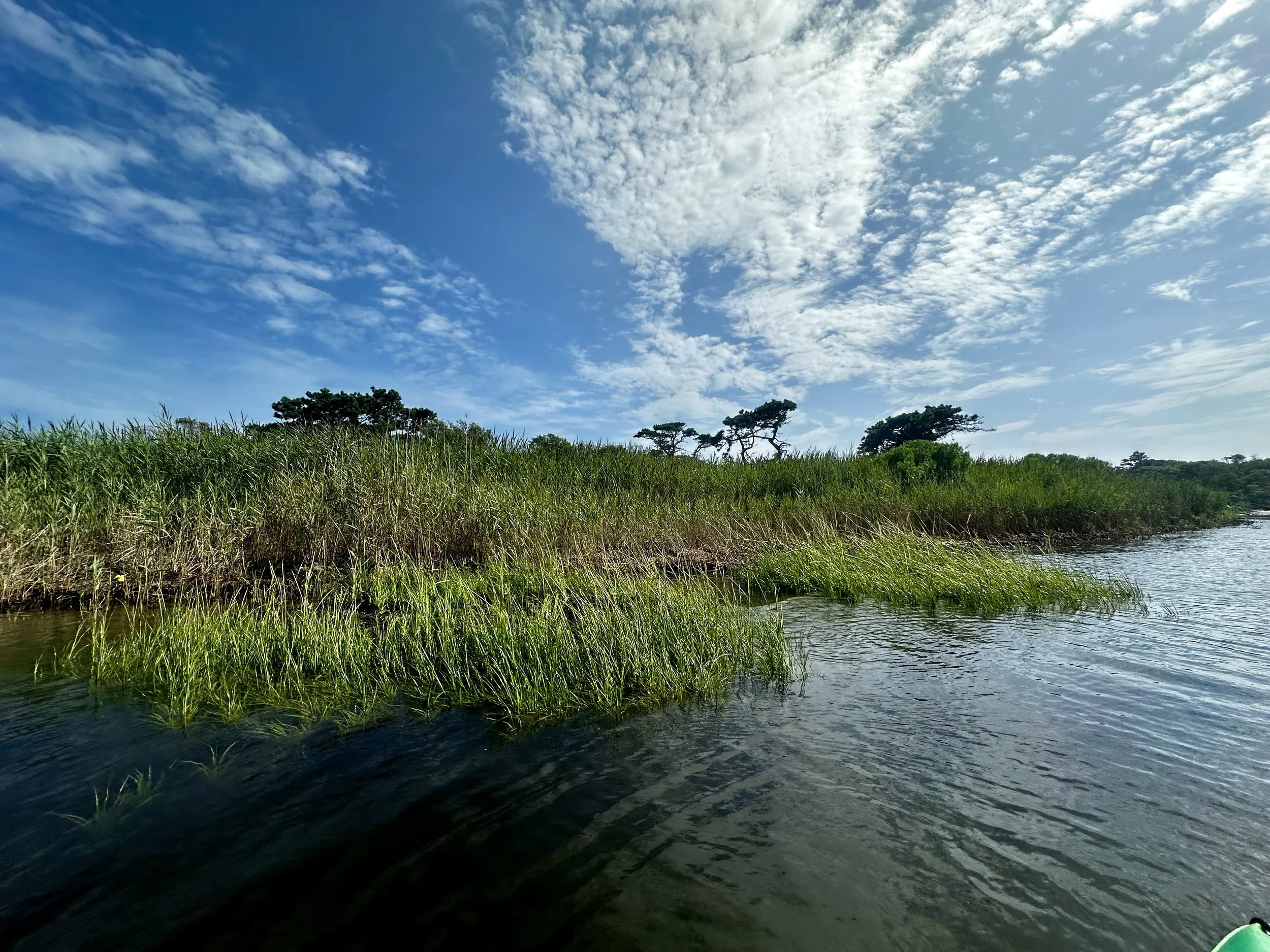
Smooth cordgrass (Spartina alterniflora) beds begin to thrive in the intertidal waters along the bay shoreline. 2024
The following year, there were two patches.
This year, a third.
No one planted them.
Their seeds or rhizomes likely arrived as they have for thousands of years, carried by tides and currents from elsewhere along Fire Island. The bay delivered what the shoreline needed.
What we are witnessing is ecological succession beginning again, potentially the missing link and buffer needed to stop the erosion of the shoreline and forest edge.
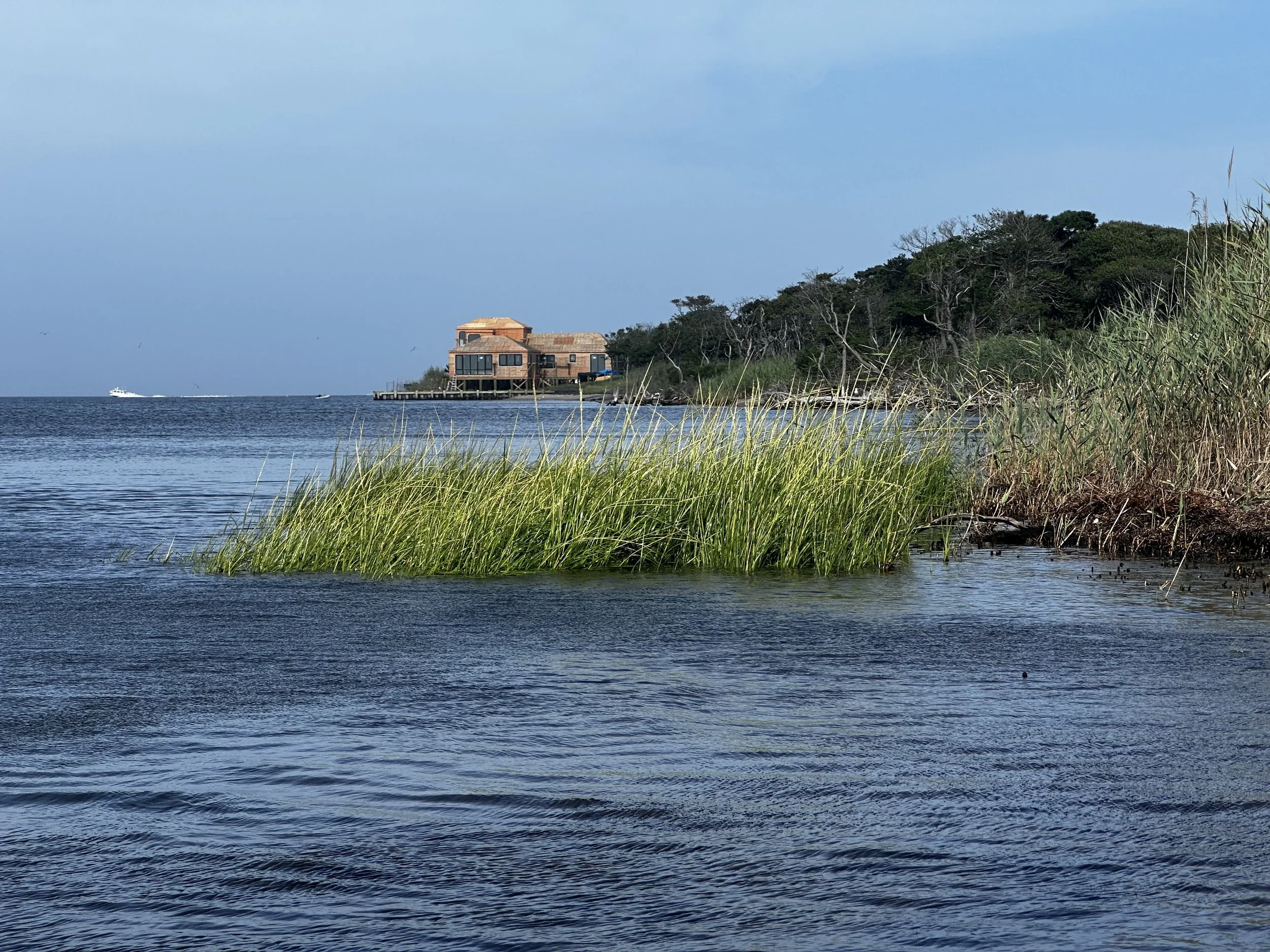
Smooth cordgrass in bloom, producing seeds that can disperse along the shoreline.
These tiny mudflats may be among Fire Island's best-kept secrets. They are small enough to escape notice, yet they reveal exactly how a living shoreline rebuilds itself. Smooth cordgrass slows the water, traps suspended sediment, and begins raising the marsh surface one tide at a time. Just as American beach grass captures windblown sand to build a dune, smooth cordgrass captures mud and organic matter to build the bay's edge.
Both are engineers.
Both hold an island together.
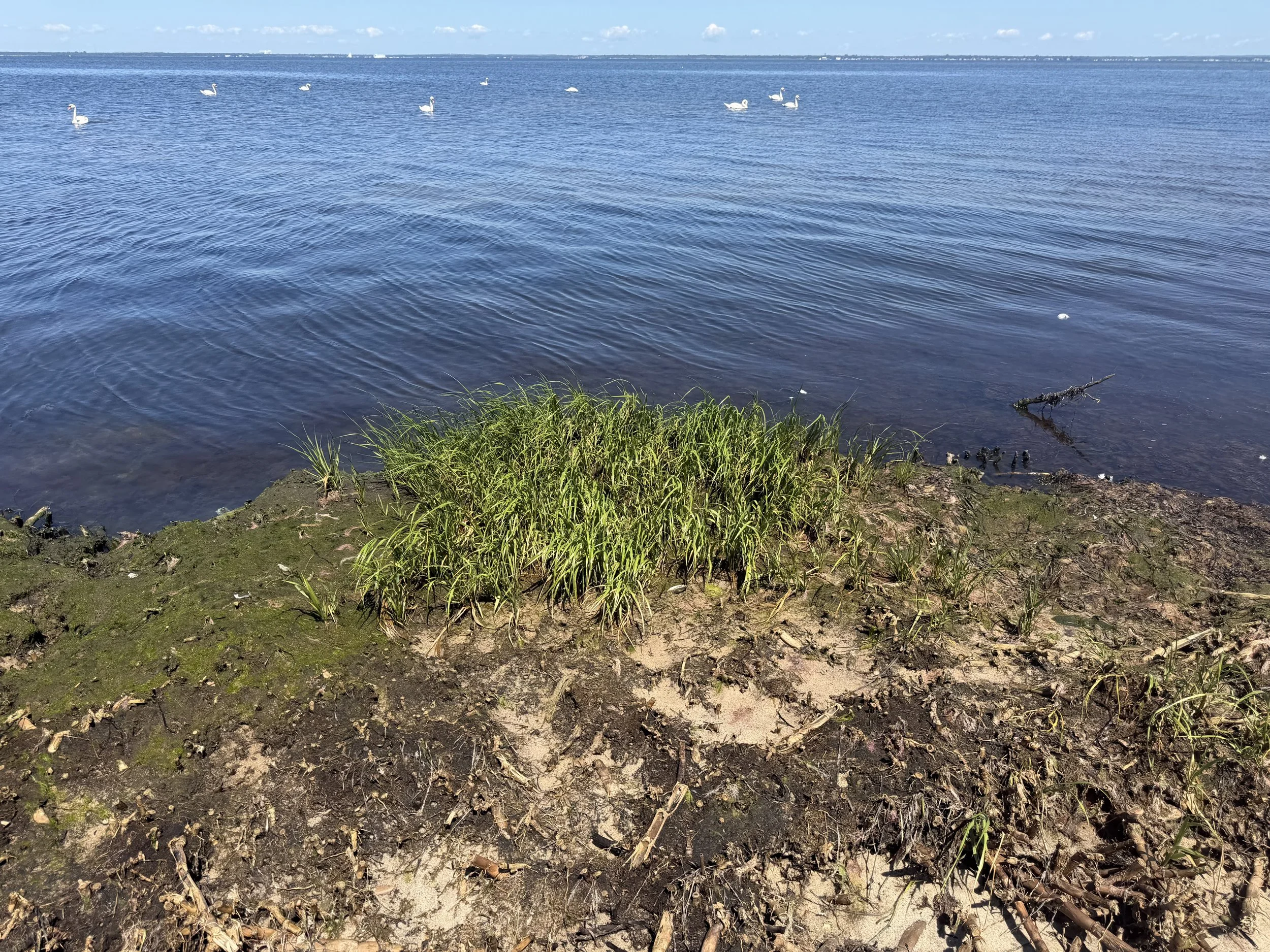
Smooth cordgrass emerges from a third root bed of common reed (Phragmites australis). 2026
On my most recent visit, another quiet arrival caught my attention.
Nestled among the young cordgrass was a ribbed mussel.
To most people, it would seem insignificant. To an ecologist, it was another vital sign.
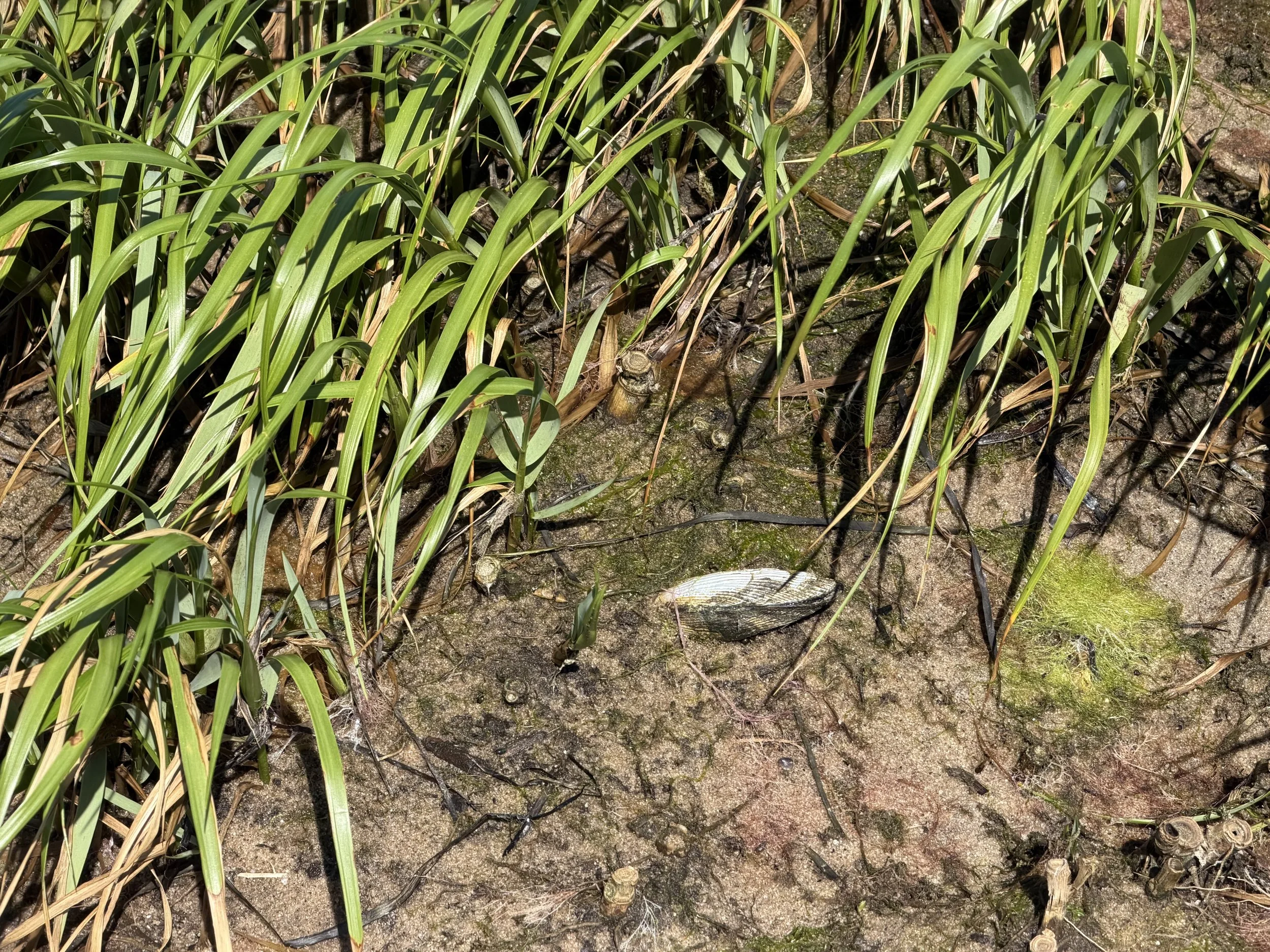
The Atlantic ribbed mussel (Geukensia demissa). 2026
Plants are often the first vital sign.
One species quietly arrives, and, if we are paying attention, it leads us to another. Smooth cordgrass appears, and soon ribbed mussels settle among its stems. The mussels enrich the marsh with nutrients. The cordgrass stabilizes the mud and shelters the mussels from waves and heat. Together, they create the conditions for countless other organisms to follow.
One secret leads to another.
One vital sign leads to the next.
This is how succession works.
Too often, these stories end before they have a chance to unfold. Foot traffic, boaters cut a path. A shoreline is hardened. A wetland is filled. The quiet sequence that has taken years to begin is interrupted before most people ever knew it existed.
Places like this deserve our protection, not because they are dramatic, but because they reveal how nature heals itself. They are living classrooms where the next generation of shoreline quietly assembles, one plant, one shell, one tide at a time.
Perhaps these little mudflats should remain Fire Island's best-kept secrets. These mudflats ask very little of us. No permits, no machinery, no funding cycles, only the discipline to leave them alone long enough to finish what they've already begun. That may be the harder work: resisting the urge to intervene, to harden, to "fix" a shoreline that is, in fact, healing itself. Fire Island has spent decades relearning what these small patches of cordgrass already know, that a living edge, given time and space, will outlast anything we build to replace it. The choice in front of us is not whether to act, but whether we can recognize when the land is already answering.
And once we recognize it, we can help it along.
These mudflats are proof of concept. What has taken hold here on its own, cordgrass finding a foothold, mussels settling into its roots, is the same living architecture that soft shoreline design and biomimicry seek to build deliberately elsewhere. Organizations like Seatuck Environmental Association are already doing this work: planting cordgrass, introducing ribbed mussels, and restoring the natural partnerships that harden shorelines the way nature intended, not against the bay, but with it. Fire Island doesn't need to invent a solution. It only needs to recognize the one already growing at the water's edge, and give it room, and help to spread.
Field Note: The Arrival of the Ribbed Mussel
The Atlantic ribbed mussel (Geukensia demissa) is one of the quiet engineers of our salt marshes.
Living among the roots of smooth cordgrass (Spartina alterniflora), ribbed mussels attach themselves with strong byssal threads that stabilize marsh sediments while reinforcing the living shoreline. As filter feeders, they pump surrounding bay water through their gills, removing phytoplankton, bacteria, suspended organic matter, and excess nutrients. In doing so, they improve water clarity and help reduce the nitrogen loads that contribute to harmful algal blooms and low-oxygen conditions. Their waste also fertilizes the marsh plants growing around them, strengthening the partnership between cordgrass and mussels.
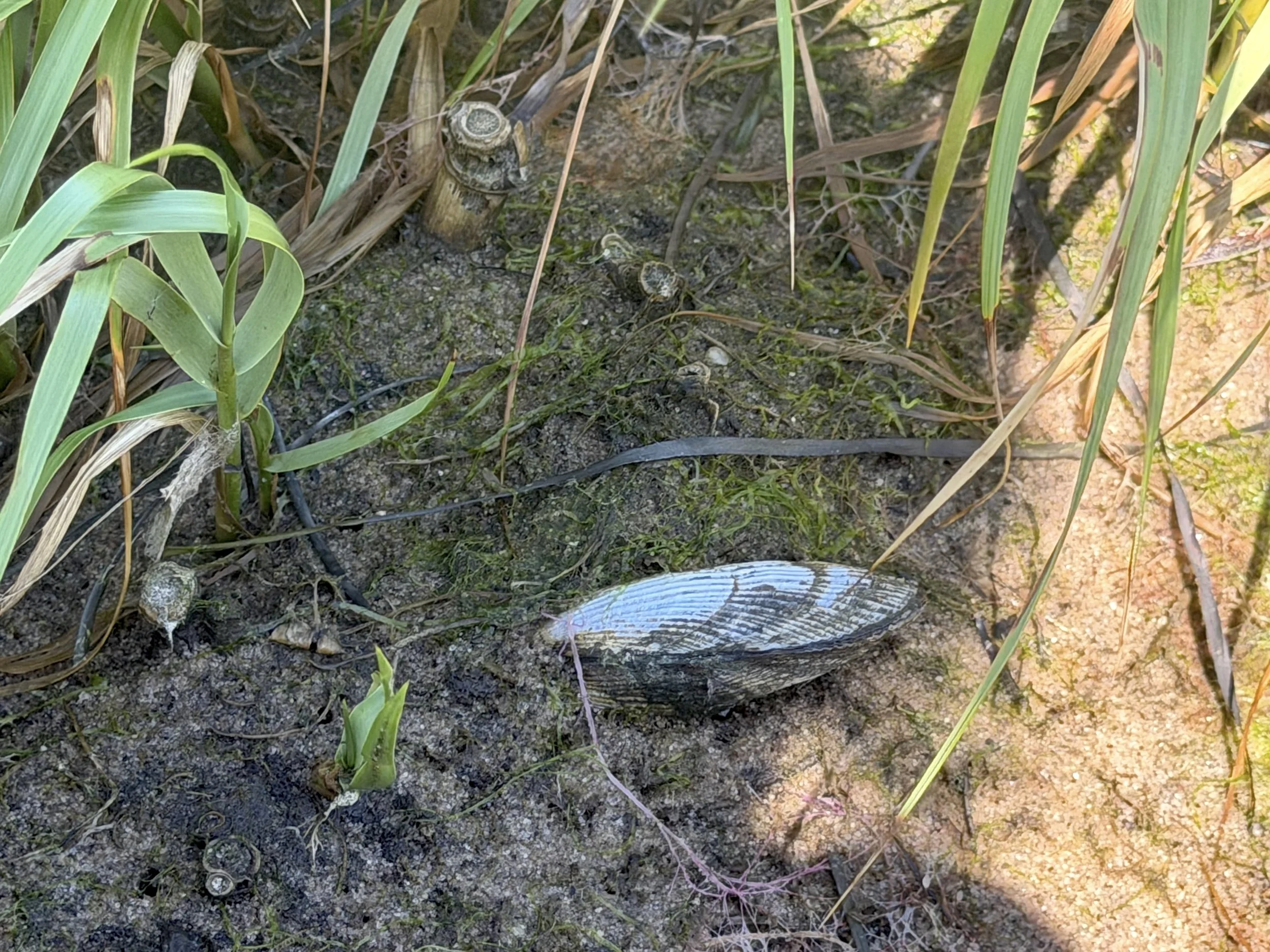
The Atlantic ribbed mussel (Geukensia demissa).
This natural partnership is one of the finest examples of ecological succession. As smooth cordgrass colonizes an emerging mudflat, ribbed mussels often follow. Together they slow currents, stabilize sediments, improve water quality, and create habitat for fish, crabs, worms, insects, shorebirds, and countless other organisms that depend on healthy salt marshes.
Seatuck and other regional restoration partners are already extending this pattern deliberately across Long Island's bays. But nature has been performing this work for thousands of years. The quiet arrival of a single ribbed mussel among a young stand of cordgrass is a reminder that our role is often not to replace these living systems, but to recognize them, protect them, and give them the opportunity to continue.
Sources:
NOAA Fisheries. Ribbed Mussels Could Help Improve Urban Water Quality.
Mass Audubon. Saving the Salt Marsh with Mussels.
Seatuck Environmental Association. Wildlife Conservation and River Revival Initiatives.
Save Coastal Wildlife. Ribbed Mussel and We Need More Ribbed Mussels for Urban Water Restoration.