Land Report #4: A Meadow, Just Underwater
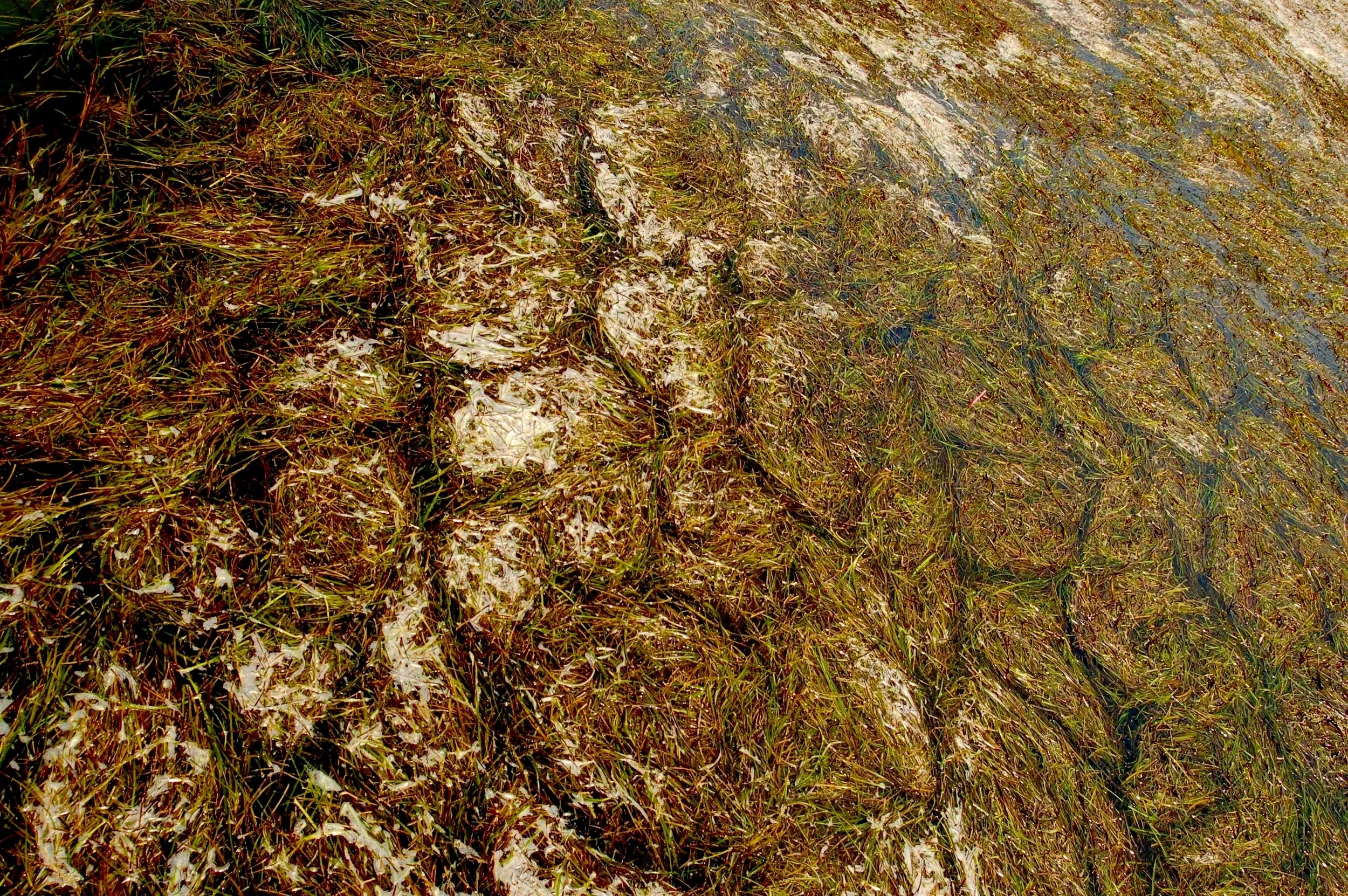
Zostera marina, commonly known as eelgrass, forms the underwater meadows of the Great South Bay, one of the region's most important habitats for marine life.
The Forests Grow on Land. The Meadows Grow Underwater.
Here on Fire Island, in the Grove where I live, a coastal town if there ever was one, though these days it's got more happy hours, tea dances, and underwear parties than sailors and fisherman, more business than bay life. Today the air kicks up salt and low tide and something faintly sweet underneath it, fresh sea air with an earthy, marshy edge. Growing up on the coast, that smell is nostalgia to me, plain and simple. To city folk stepping off the ferry for the first time, it might just smell like the shore. But give it enough sun and that sweetness turns, souring into something sulfurous and low, like rotting mud. And there it is, everywhere along the bay line: dark, slippery ribbons tangled up in the wrack line, emerald green fading to olive in the sun. It looks like seaweed. It isn't. Those are the leaves of eelgrass (Zostera marina), and what you're standing over is the tail end of a life that was, until very recently, still down there, swaying, breathing, alive underwater.
Eelgrass isn't seaweed at all. It's a true flowering plant, with roots and leaves and flowers and seeds, and it grows in meadows across the bay floor wherever the sunlight can reach down and find it. Picture grass bending in a breeze, except the breeze is current, and the field runs for acres under the surface.
By summer, the older leaves start to let go, worn loose by tides, storms, wind, the wake of passing boats. They release and drift, tumbling through the water column before the tide finally lays them out on the sand. It's not decay. It's not a die-off. It's just what a healthy meadow does every year, shedding its old growth like a forest drops its leaves.
And that's really what these meadows are: a forest, just underwater. They're the nursery of the bay, the place young fish, scallops, blue crabs, and shrimp hide and grow before they're ready for open water. Without that tangle of green to disappear into, a lot of them wouldn't make it.
The grass does more than shelter things, too. Its roots knit the bay floor together, holding sediment in place instead of letting it wash off into open water. Its leaves slow the waves and currents passing over them, so the water stays clearer. And down in that tangle of roots and mud, something bigger is happening, eelgrass is what scientists call "blue carbon," meaning it pulls carbon dioxide and methane out of the water and locks them away in its roots and the sediment below, year after year. Acre for acre, it's one of the most efficient carbon sinks on the planet, quietly doing its part against a warming world. A healthy meadow means a healthier bay, full stop, and, it turns out, a healthier planet too.
Even after it lets go and rides ashore, the eelgrass isn't finished. Those dark ribbons piling up in windrows along the ocean front become a world of their own, food and shelter for tiny crustaceans, insects, worms, all of which draw the shorebirds in to feed. As it breaks down, it feeds the coast itself, releasing nutrients back into the system and often trapping sand as it goes.
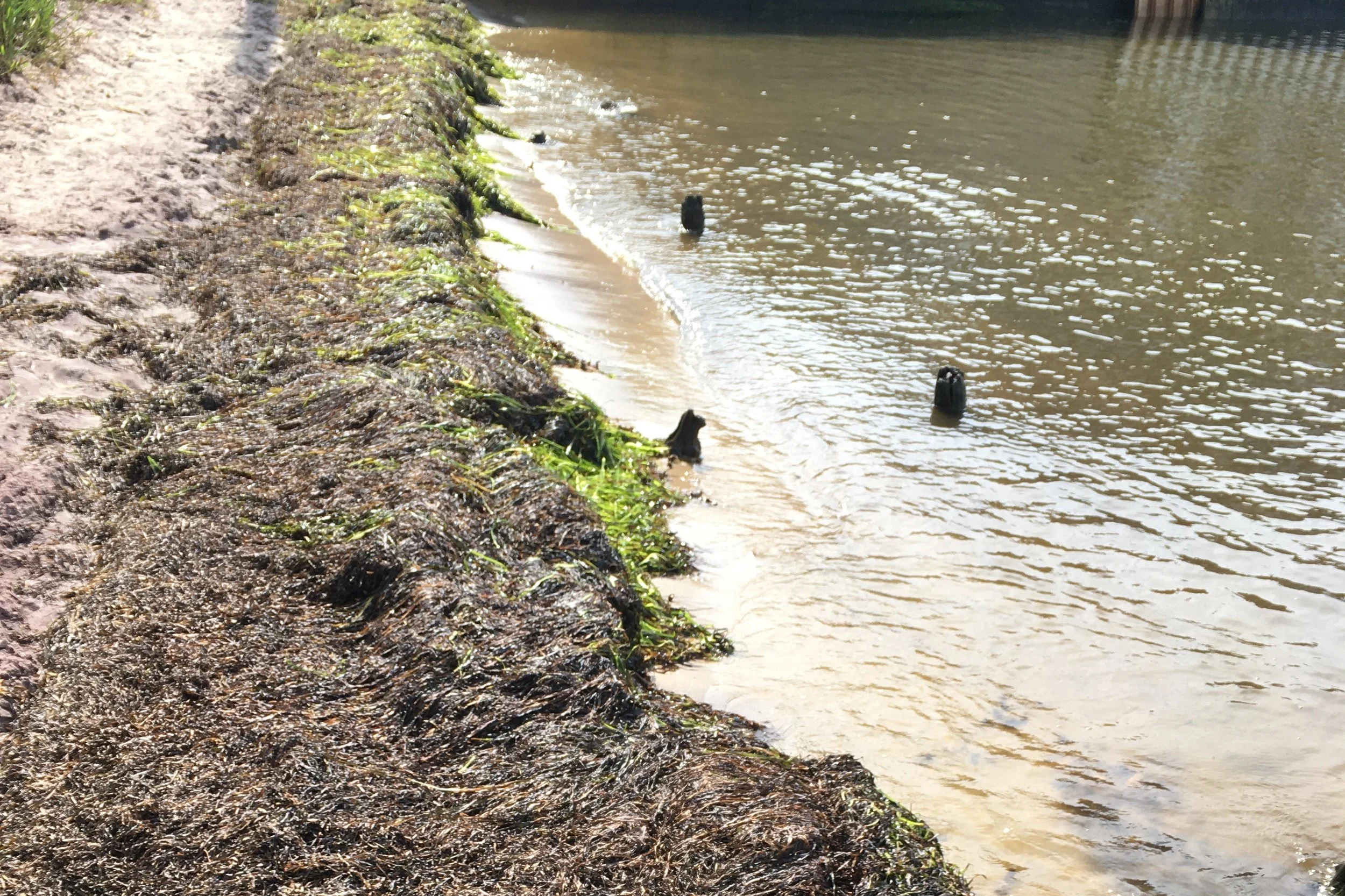
Eelgrass wrack along the Cherry Grove bayfront in July.
So the next time you're out along the ocean or bay front, brine in the air, and you see that heap of green-black ribbon at the bay line, slick and torn, don't think of it as waste washed up. Think of it as a message from underneath. It's proof that somewhere just offshore, a meadow is still alive, still swaying, still doing the quiet work that keeps this whole bay breathing.
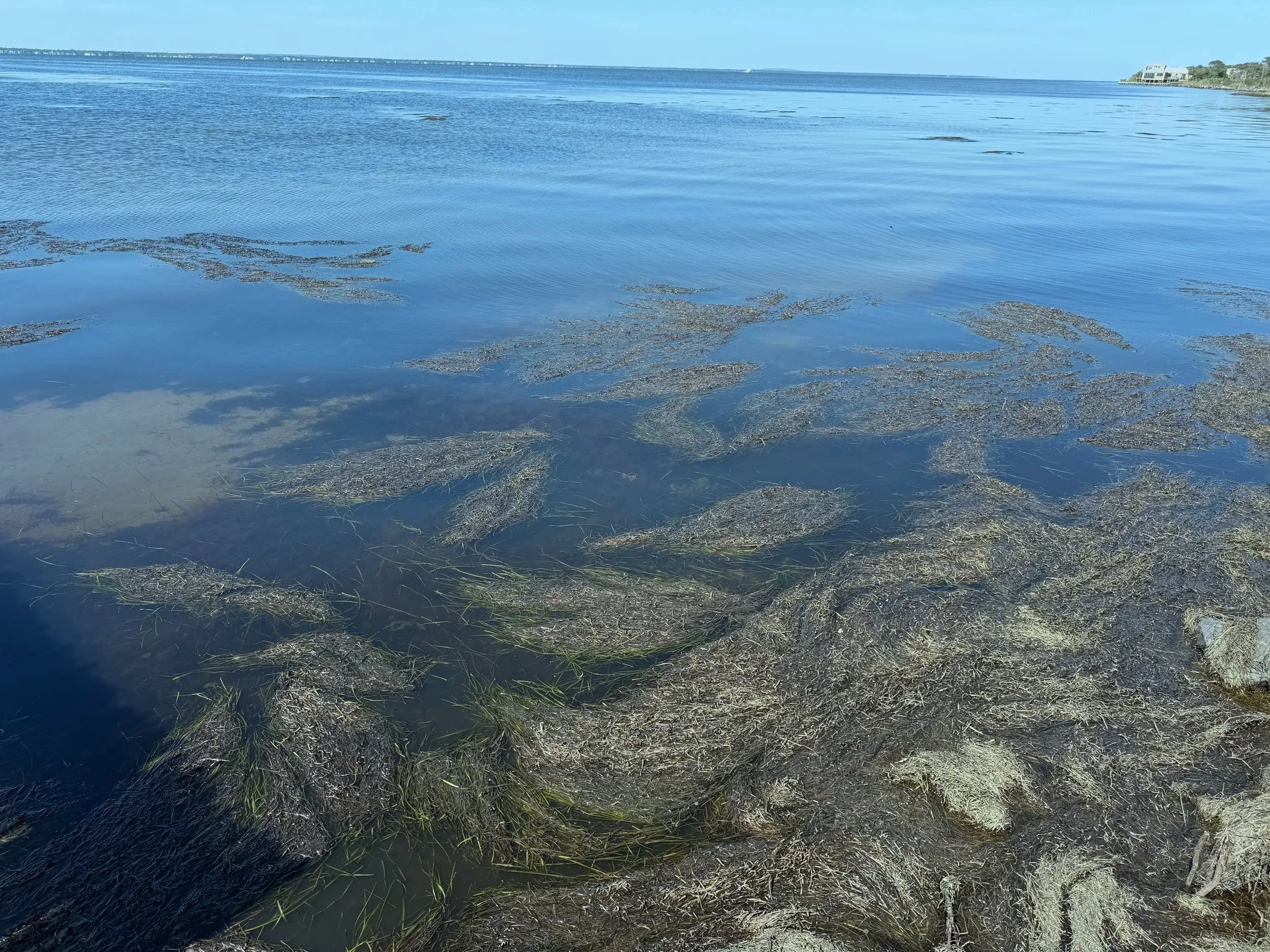
But clean water and a thriving bay aren't the whole story either. Walk past where the ribbons of eelgrass pile up, up to where the mud gives way to solid ground, and you'll find another grass doing its own quiet work, Spartina alterniflora, smooth cordgrass, standing stiff along the marsh edge. Where eelgrass holds the bay floor together from below, Spartina holds the shoreline together from above, its roots lacing through the mudflats so thick and deep that they're what keeps the edge from simply tearing away, tide after tide, storm after storm.
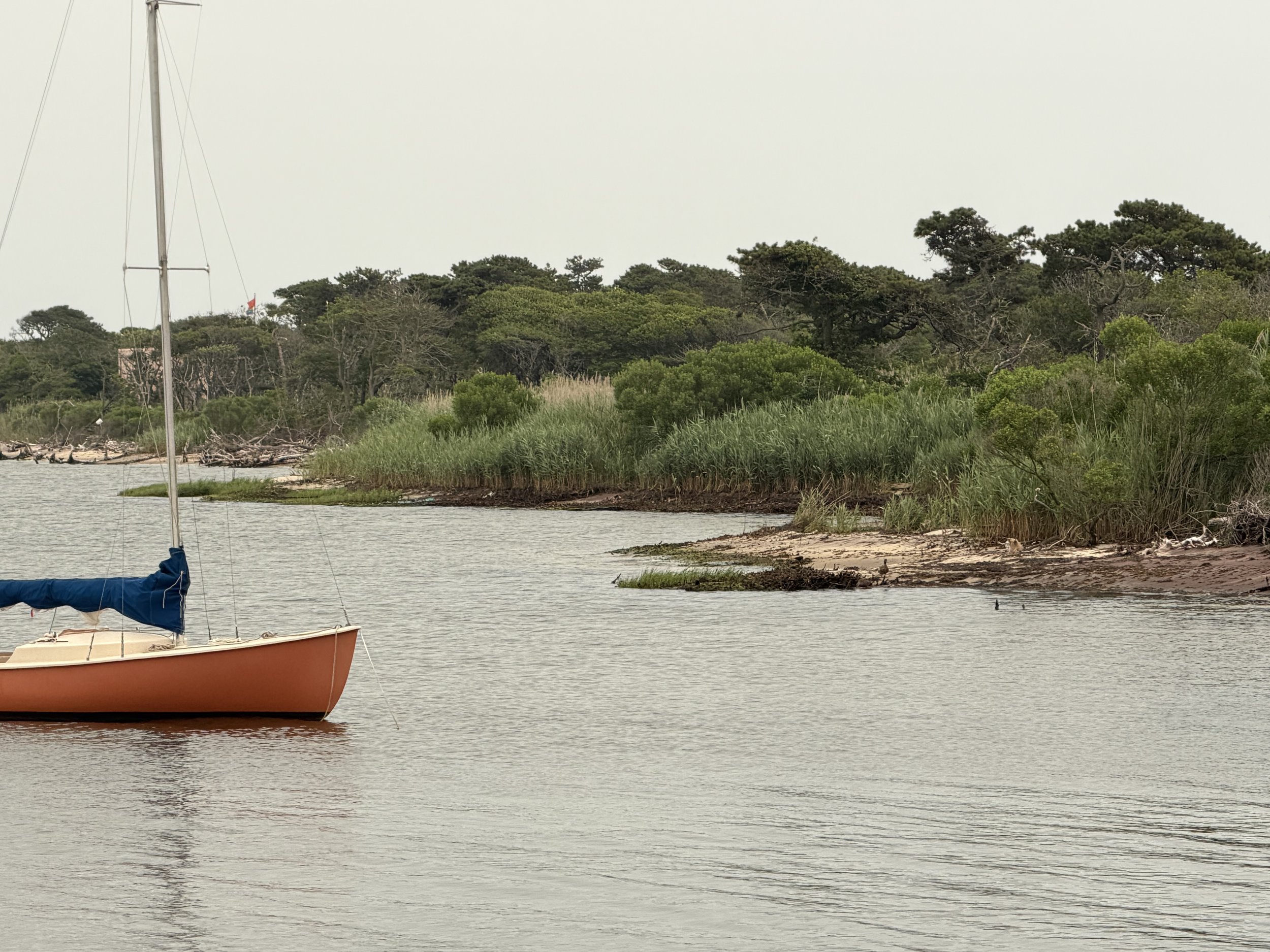
Carrington Tract shoreline erosion. The natural forces of wind, tide, and wave action continue to reshape the edge of the Great South Bay.
The two work as a pair, really, one holding the bottom, one holding the edge, and between them, the whole shoreline stays put. Lose one and the other has more work to do than it can manage alone.
But look for that cordgrass and sometimes it isn't there at all. Instead you'll find a wall of phragmites, tall and feathery, standing where the marsh edge should be, and something about it feels off, even if you can't name it. That's because phragmites isn't holding anything together the way cordgrass does. It's a stand-in, not a foundation. And where neither one grows anymore, the mudflat itself is often just gone, hardened into a bulkhead, or left as a bare, dead stretch of shore where nothing roots and nothing holds.
You never knew the mudflat was missing because you never knew it was supposed to be there.
So I'll ask you to consider it, the mudflat, and where it went, and why it isn't part of how we think about this coast. We talk about our dunes as if they're obvious: the pioneers, the soldiers standing guard on the ocean side, taking the first hit from every storm. But the bay side needs its own line of defense too. The mudflats and the marshes behind them are doing the same work, just quieter, just underwater half the time, and they deserve the same place in how we picture this shoreline.
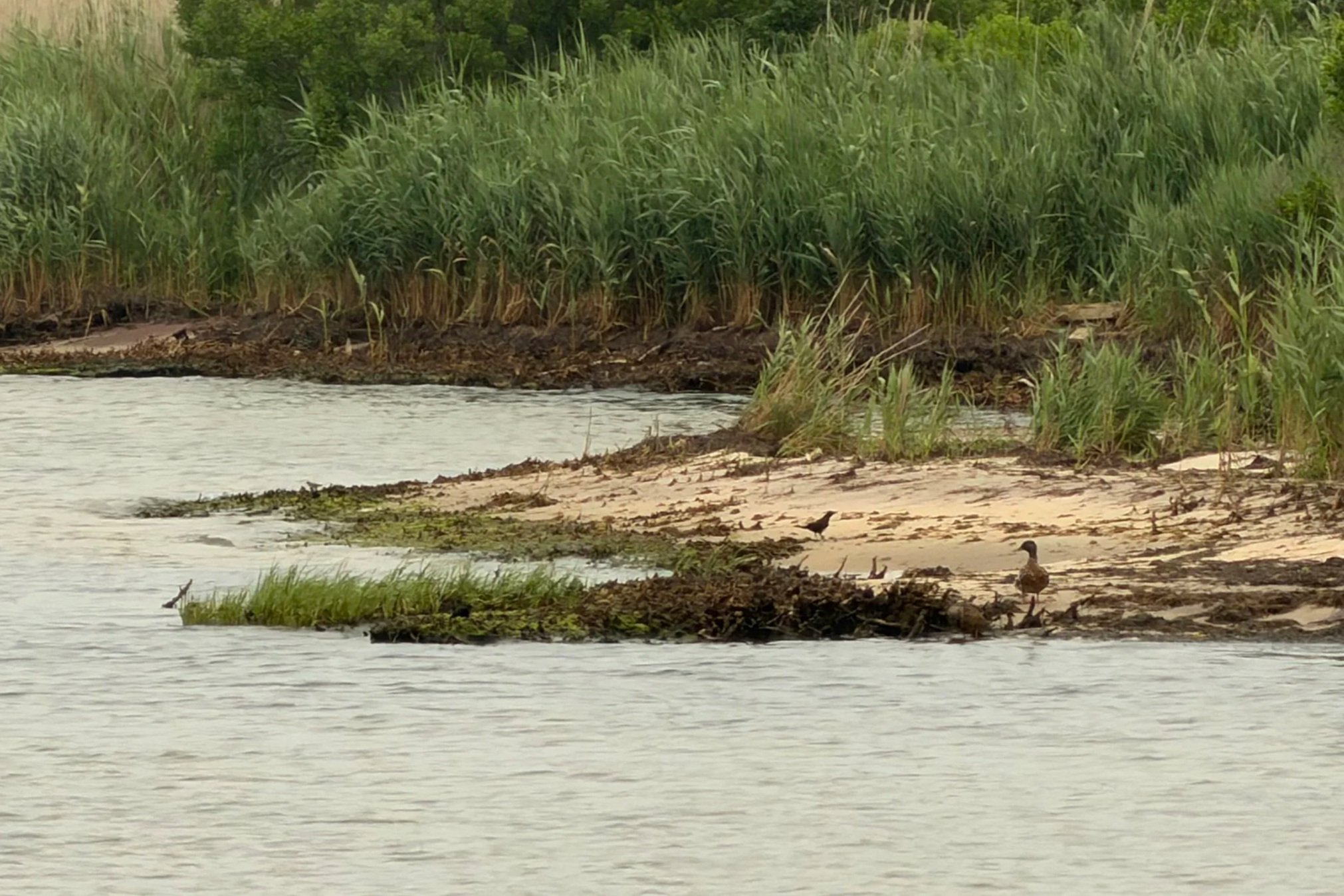
Native smooth cordgrass returning where invasive phragmites have receded. The first stages of a living salt marsh rebuilding itself along the Carrington Tract.
Blue carbon research via The Pew Charitable Trusts.