Land Report #2: On Fortifying Dunes
Winter Wind Moving Sand
After Erosion: Dune Formation, With or Without Intervention
There is a recurring instinct, when faced with erosion, to add, to fortify, to supplement, to improve the soil, as if the dune were lacking something.
But a dune is not lacking.
It is not a soil system in need of enrichment. It is a movement system, built grain by grain through wind, time, and the quiet labor of plants that do not resist these forces, but work within them.
On Fire Island, the primary dune was once continuous, a long, unbroken form, what locals called The Wall, built not through intervention but through accumulation. Sand moving at a matter of millimeters per second, caught at the base of beach grass, lifted again, caught again, over decades becoming height, and then protection.
This process is not driven by nutrients. It is driven by motion.
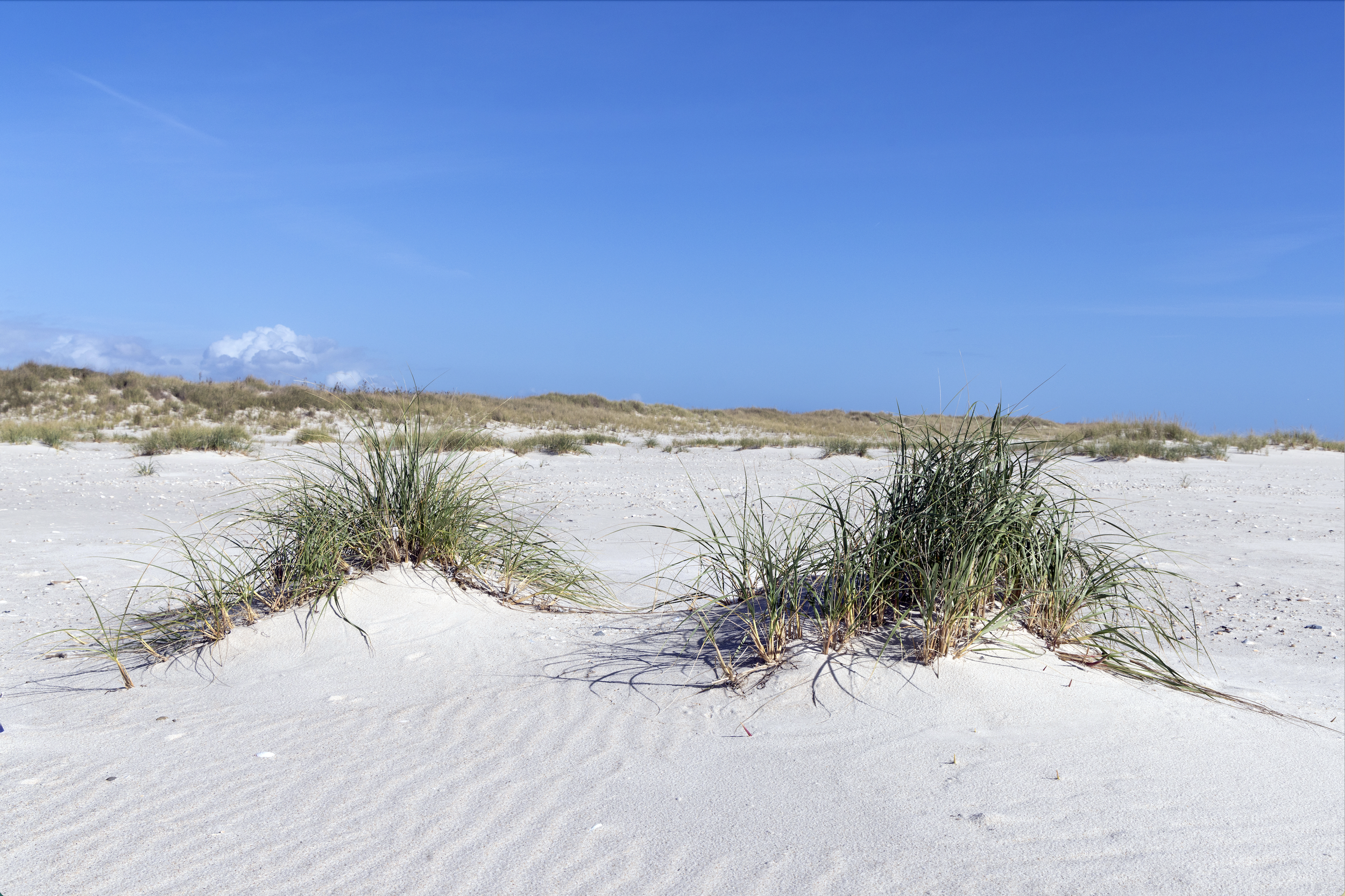
Ammophila breviligulata, beach grass, reclaims the eroded dune front each spring, rhizomatically advancing into fine quartz sand.
The plants that belong here, Ammophila breviligulata, beach pea, seaside goldenrod, are not indicators of fertile ground. They are indicators of stress, exposure, and change. They grow upward as they are buried. They extend laterally as sand moves. Their strength is not in density, but in their ability to respond.
To introduce fertilizers or amendments into this system is to misunderstand its foundation.
Nutrient enrichment does not strengthen a dune. It alters it.
Growth becomes soft where it must be tensile. Roots become shallow where they must chase movement. Opportunistic species arrive where specialists once held ground.
And most critically, the focus shifts away from the one mechanism that actually builds dunes: the uninterrupted movement of sand.
A healthy dune is not compacted. It is porous. It breathes. It absorbs wind and storm energy by giving way, redistributing, and reforming.
To attempt to "fix" it through material input, whether industrial or recycled, is to impose a static solution on a dynamic system.
There are ways to build dunes. They are not new. They are quiet, repeatable, and often overlooked:
– Allow sand to move across the beach in winter months
– Keep the toe of the dune smooth, free of ruts and disturbance
– Use low, biomimetic sand fencing to slow and capture grain
– Protect and expand native plant communities already adapted to this work
– Maintain continuity across properties, rather than fragmenting the system
But before any intervention, there is a more essential step that is often skipped: to study the dune itself, its history, its position, and its movement over time.
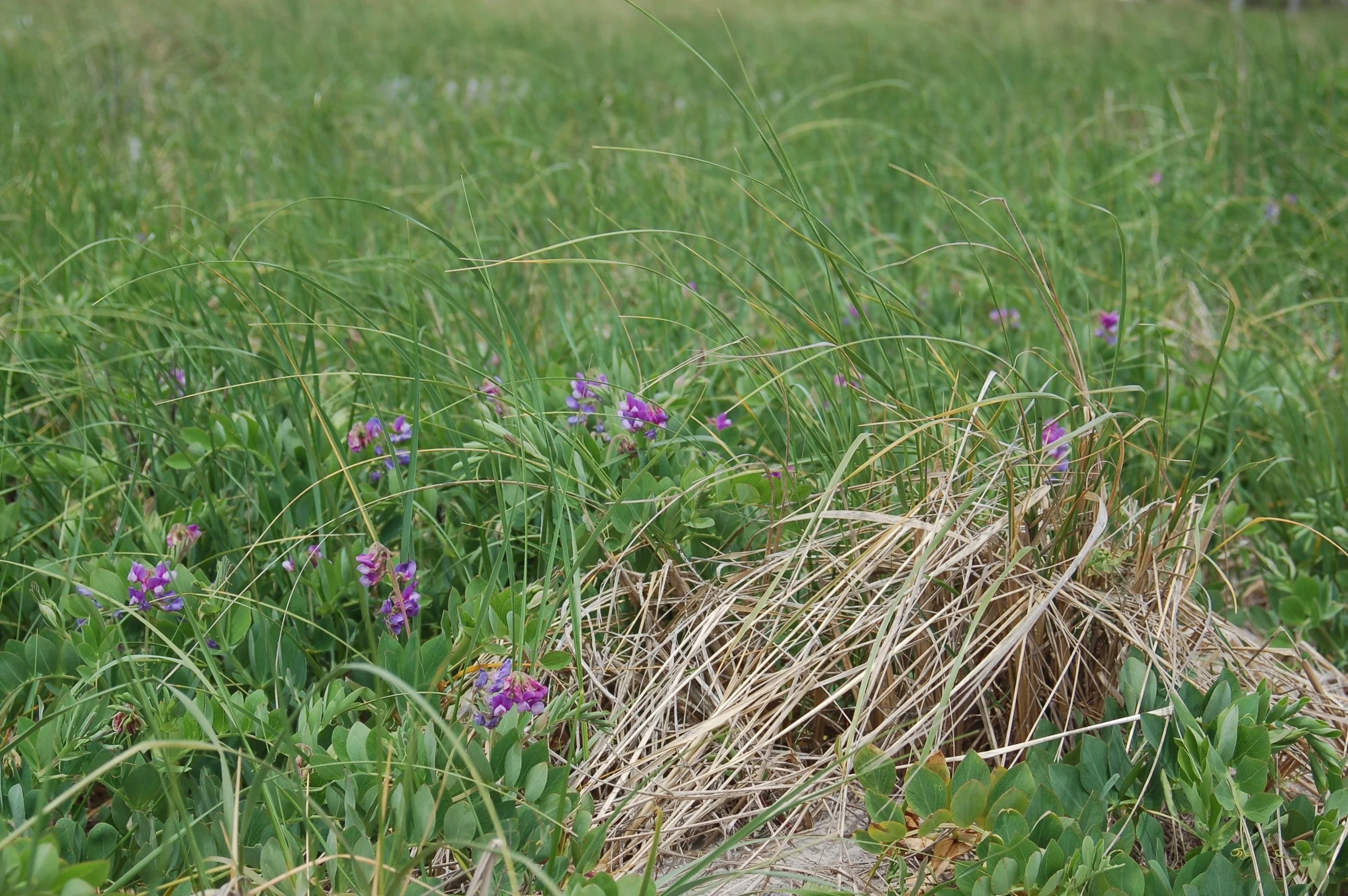
Lathyrus japonicus, beach pea, a nitrogen-fixing legume of the dune system.
Each community on Fire Island holds a different dune line. Some dunes have advanced. Some have retreated. Some now sit in front of homes that were once well behind them. Others have been engineered forward, held in place through renourishment and construction.
The question is not simply how to strengthen a dune, but:
Where is this dune in its life cycle? How long has it been moving in this direction? Are we working with that movement, or against it?
In many places, we are holding a line that has never been still. We dredge and replenish. We rebuild and reinforce. And we ask, often without answering: for how many years can this be sustained?
The dune does not ask this question. It advances, erodes, and rebuilds as part of its function.
Erosion is not failure. It is release.
A dune is not diminished when it is cut back by a storm. It is not a fragile edge. It is a frontline system, a structure that has, for hundreds of years, taken the force of wind and water, given way where necessary, and rebuilt itself again.
This is not about sentiment. It is how the system works. It is intentional, a system designed to absorb impact, to adapt, and to recover.
Resilience on a barrier island does not come from fixing the dune in place. It comes from understanding where it needs to move, and allowing it to do so wherever possible.
Innovation has a place here, but only if it begins with a clear reading of the land.
On a barrier island, resilience is not engineered into the system from the outside. It is grown from within it, through the continuous exchange between wind, sand, and plant.
Anything that interrupts that exchange, no matter how well intentioned, risks weakening the very thing it aims to protect.
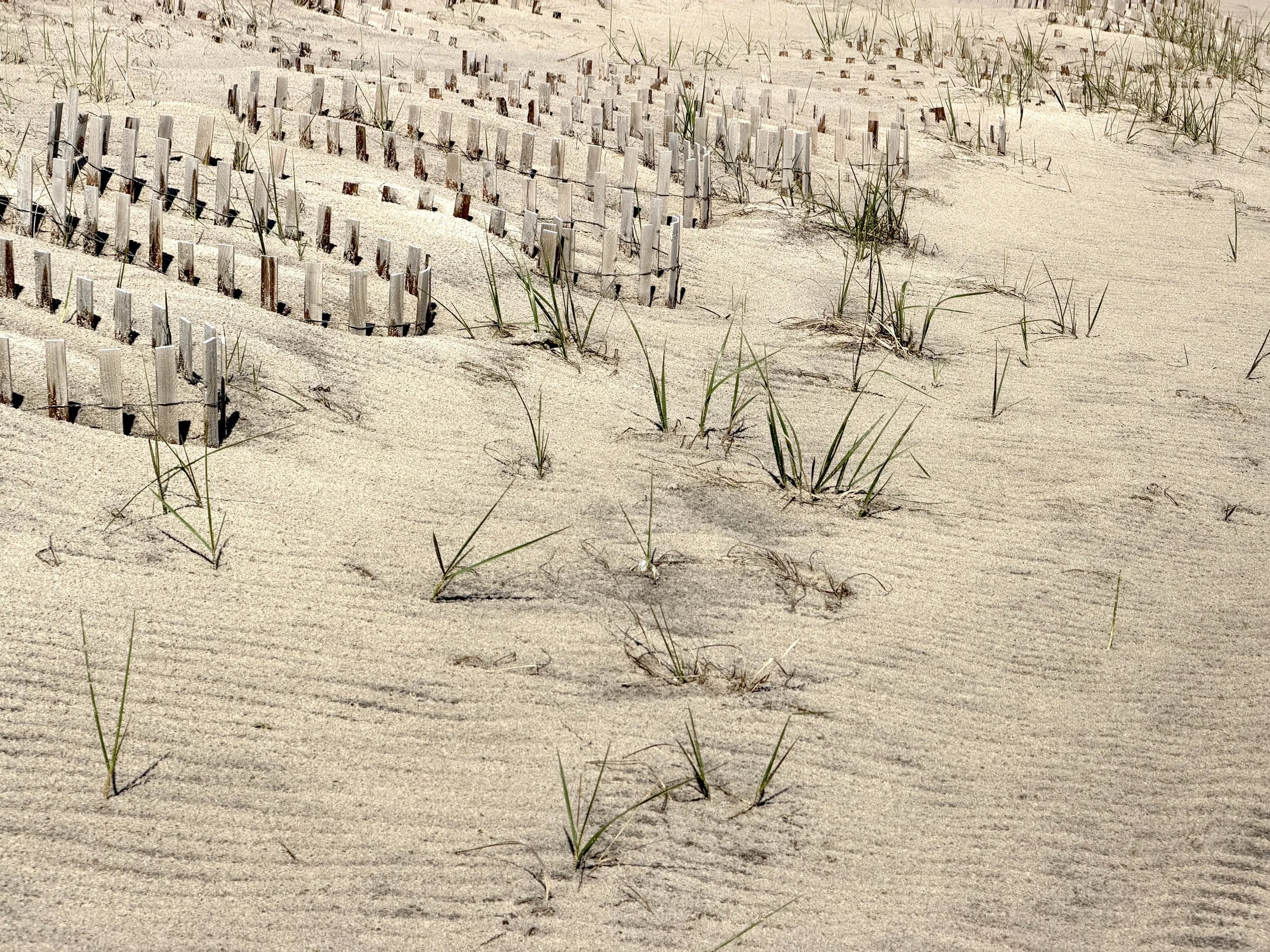
Fall 2025 serpentine fencing, buried for the spring 2026 grass blades to emerge where winter sand has gathered along the dune.
© 2026